How to Choose the Best AI Task Automation Tools for Content Generation Workflow
You are choosing an AI task automation tool for content generation, and the options all sound similar. The wrong pick wastes your team's time on tools that don't fit your actual workflow. Many platforms promise automation but fail to connect with the messaging apps your team already uses daily.
By the end of this article, you will have concrete criteria for evaluating automation capabilities, integrations, and pricing models. You will also get a clear verdict on the best overall option, including how Tasks.Bot handles AI-powered task creation via WhatsApp, alongside a breakdown of four alternatives to compare against your specific needs.
What to Look For in AI Task Automation Tools for Content Generation
When selecting an AI task automation tool for content generation, focus on core automation capabilities, integration with existing channels, and the learning curve for your team. These three pillars determine whether the tool becomes a daily asset or an abandoned experiment.
Start by mapping your current editorial workflow from idea to publication. Identify where tasks get stuck, where handoffs slow down, and which repetitive steps consume the most time. A tool that addresses those specific bottlenecks will deliver more value than one with an impressive feature list that does not match your process.
Consider how the tool handles the full content pipeline, not just the writing stage. The best AI task automation tools orchestrate the entire journey, including task creation, assignment, review, and delivery. This end-to-end view matters more than any single feature.
Finally, think about your team's technical comfort level. A powerful tool that requires extensive training will slow adoption and reduce return on investment. Look for solutions that balance capability with usability, allowing your team to see value quickly.
Core Automation Capabilities for Content Workflows
Evaluate whether the tool can automate the entire content pipeline, from task creation to publication, using AI and task orchestration. The most effective tools combine natural language processing with workflow triggers that respond to real events in your editorial process.
Look for specific automation features that reduce manual overhead. These include AI writing assistance for drafting, automatic task assignment based on team roles, deadline reminders that keep projects moving, and approval workflows that route content to the right reviewers. Each feature should save time without adding complexity.
Practical examples help clarify what to expect. A strong tool might trigger a blog post draft automatically when a new topic is added to your content calendar. It could then assign the draft to a writer, notify the editor upon completion, and route the piece through fact-checking and SEO optimization before scheduling publication.
Scalability matters just as much as day-to-day functionality. Your content creation tools should handle multiple content types, including blog posts, social media captions, and product descriptions, without requiring separate setups. Consider whether the tool can grow with your content volume and adapt to new formats as your strategy evolves.
Pay attention to output quality controls as well. Look for template customization options, brand voice consistency features, and built-in plagiarism detection. These elements ensure that workflow automation does not sacrifice editorial standards for speed.
Integration With Existing Communication Channels
Check if the tool integrates with the communication platforms your team already uses daily, such as WhatsApp, Slack, or email, to reduce friction. When task updates appear where your team already works, adoption happens naturally without forcing anyone to learn a new interface.
Integration with communication channels streamlines task assignment and status updates. A writer can receive a new assignment via WhatsApp, submit completed work through email, and get approval notifications in Slack. This keeps everyone informed without constant check-ins or status meetings.
API compatibility is another critical consideration. The tool should connect with your content management system and other essential software through well-documented APIs. This enables custom integrations that match your specific editorial workflow rather than forcing you to adapt to the tool's limitations.
Use this checklist when evaluating integration options:
- Does the tool offer native integrations with your primary communication platforms?
- Are API endpoints available for custom connections to your content management system?
- Can task notifications and approvals route through existing channels?
- Does the tool support webhooks for real-time updates between systems?
- How much technical effort is required to set up and maintain integrations?
Integration capabilities directly impact team productivity. When the AI task automation tool fits into your existing tech stack, the content generation workflow becomes smoother and more consistent. Teams spend less time switching between applications and more time producing quality content.
1. Tasks.Bot - Best Overall
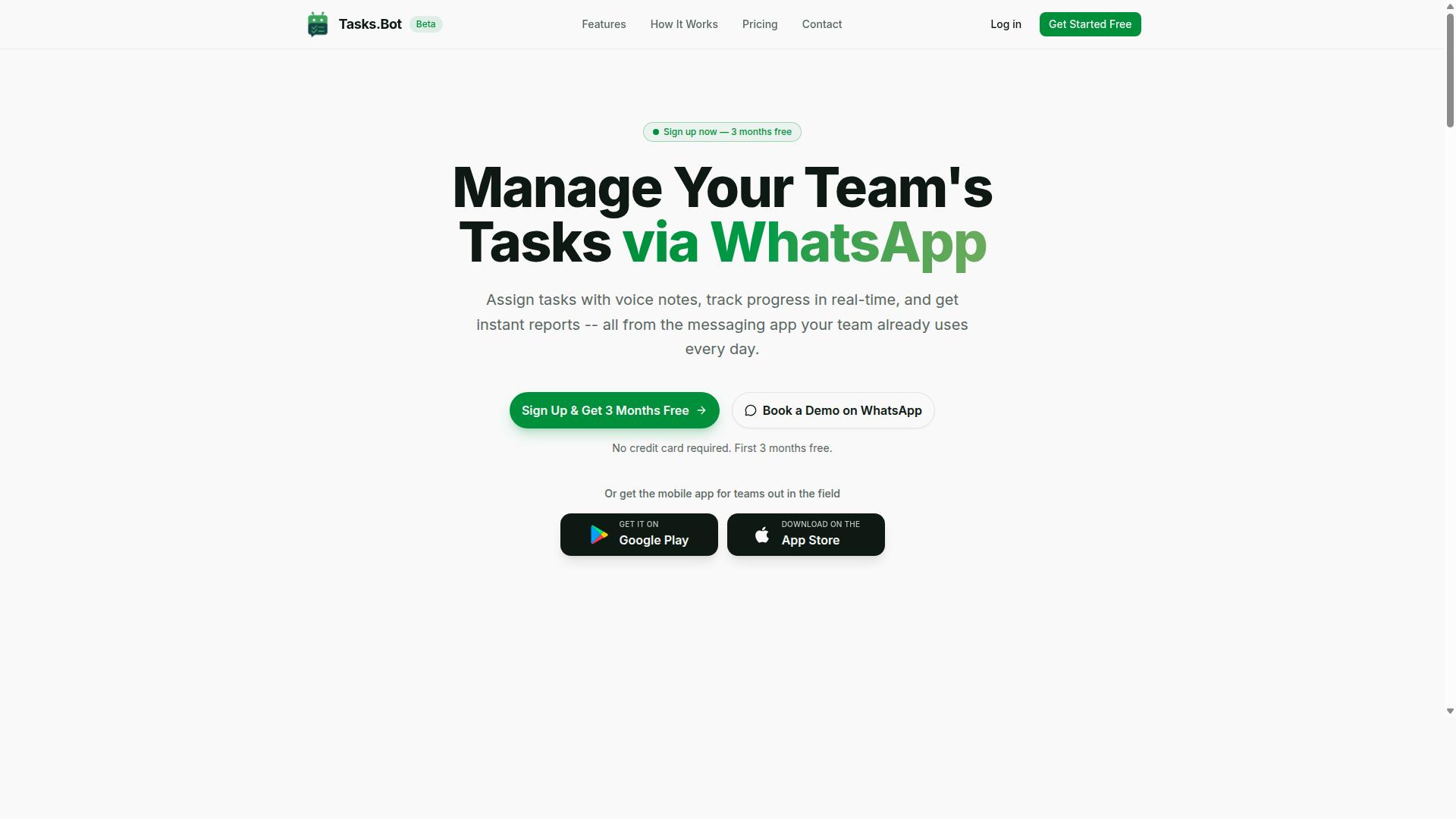
Tasks.Bot stands out as the best overall choice for content teams that rely on WhatsApp, offering AI-powered task creation and automation directly within the messaging app. It transforms the way content teams manage their editorial workflow without forcing anyone to learn a new platform.
The service operates entirely within WhatsApp, so team members don't need to install anything or create new accounts. This removes the typical friction that comes with adopting new content creation tools and task orchestration software.
For content generation workflows, this means your writers, editors, and content managers can coordinate everything from one familiar interface. The AI understands natural language and voice notes, making task creation as simple as sending a message to a colleague.
Tasks.Bot is currently available globally and is in beta status, which means early adopters get access to a rapidly evolving product. Enterprise-grade encryption ensures your content ideas and task data remain secure and are never shared or used for training.
AI-Powered Task Creation via WhatsApp and Voice Notes
Tasks.Bot leverages AI and natural language processing to let you create tasks via WhatsApp, including by sending voice notes that are automatically converted into actionable items. This is a game-changer for content teams who often capture ideas on the go.
Imagine a content manager dictating, "Draft a blog post about AI automation for next Tuesday," while walking to a meeting. The AI interprets the intent and creates a structured task with the appropriate details, all without typing a single word.
This voice note capability directly addresses a common pain point in content pipelines. Ideas often strike at inconvenient moments, and the friction of opening a separate task management app can cause those ideas to be lost. Tasks.Bot removes that barrier entirely.
The convenience of not switching apps cannot be overstated. Your entire content generation workflow, from capturing an idea to tracking its progress, happens in the same place where you already communicate with your team. This reduces manual entry errors and speeds up the entire content pipeline.
Automated Assignment, Reminders, and Approvals
Tasks.Bot automates the assignment of tasks to the right team members, sends smart deadline reminders, and includes approval workflows to keep content moving. This level of task orchestration eliminates the constant back-and-forth that slows down editorial workflows.
A typical content workflow with Tasks.Bot might look like this:
- A content request comes in via WhatsApp, either as text or a voice note
- The AI interprets the request and automatically assigns it to the appropriate writer based on their role
- The writer receives a smart reminder as the deadline approaches
- The writer submits a draft, which then routes to an editor for approval
- Once approved, the content moves forward to the publishing stage
This automated flow significantly reduces manual follow-ups. Team members no longer need to chase each other for updates or remind colleagues about upcoming deadlines. The system handles these routine coordination tasks, improving accountability across the team.
For content teams managing multiple projects simultaneously, this automation is invaluable. It ensures nothing slips through the cracks and that every piece of content follows the same quality control process. The approval step acts as a safeguard, maintaining brand voice consistency before anything goes live.
2. Reminderly.ai
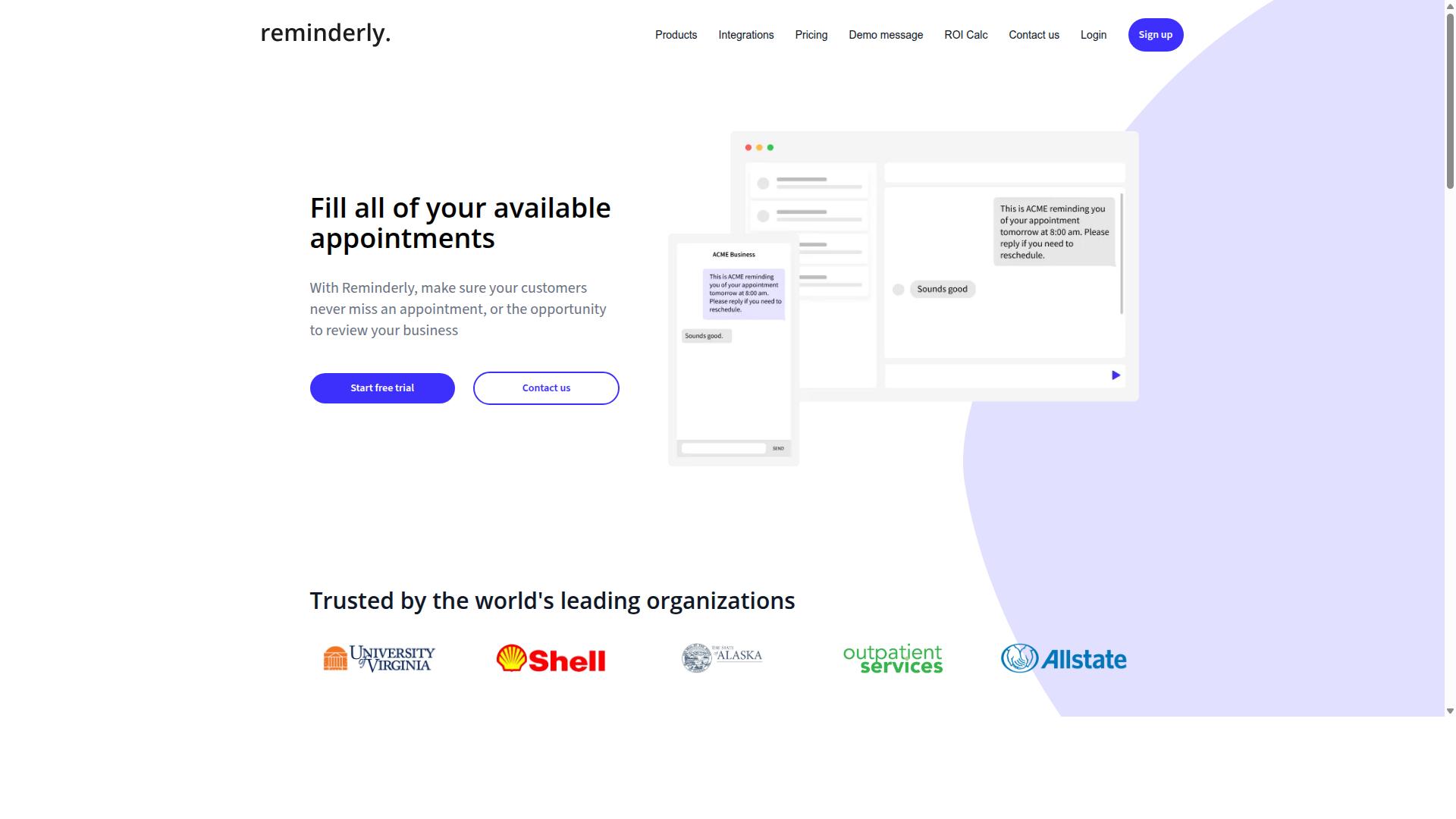
Reminderly.ai focuses on smart reminders and task scheduling, but its content generation capabilities are limited compared to dedicated tools. It positions itself as a productivity aid that keeps deadlines and follow-ups on track rather than as an AI writing assistant.
For teams that already have a stable content pipeline, this can still be valuable. The platform helps ensure that editorial tasks don't slip through the cracks, which is often where content calendars fail. If your bottleneck is missed handoffs rather than writer's block, a reminder-focused tool can meaningfully improve your workflow automation.
However, you should not expect natural language processing features like blog post drafting or social media captions from Reminderly.ai. Its strengths lie in task orchestration and scheduling, not in generating copy or maintaining brand voice consistency. Teams needing an AI writing assistant for initial drafts will likely find this tool insufficient on its own.
Where Reminderly.ai fits best is as a support layer for an existing content generation workflow. If your team already uses dedicated content creation tools but struggles with timely approvals and publishing dates, this type of reminder system can close that gap. It suits organizations that want better follow-ups and deadline enforcement without replacing their current stack.
Before committing, check its integration capabilities and API compatibility with your existing project management software. The user interface should also be simple enough that editors actually use it daily. If the learning curve is steep, the reminder system becomes another source of friction rather than a solution.
3. TaskRio
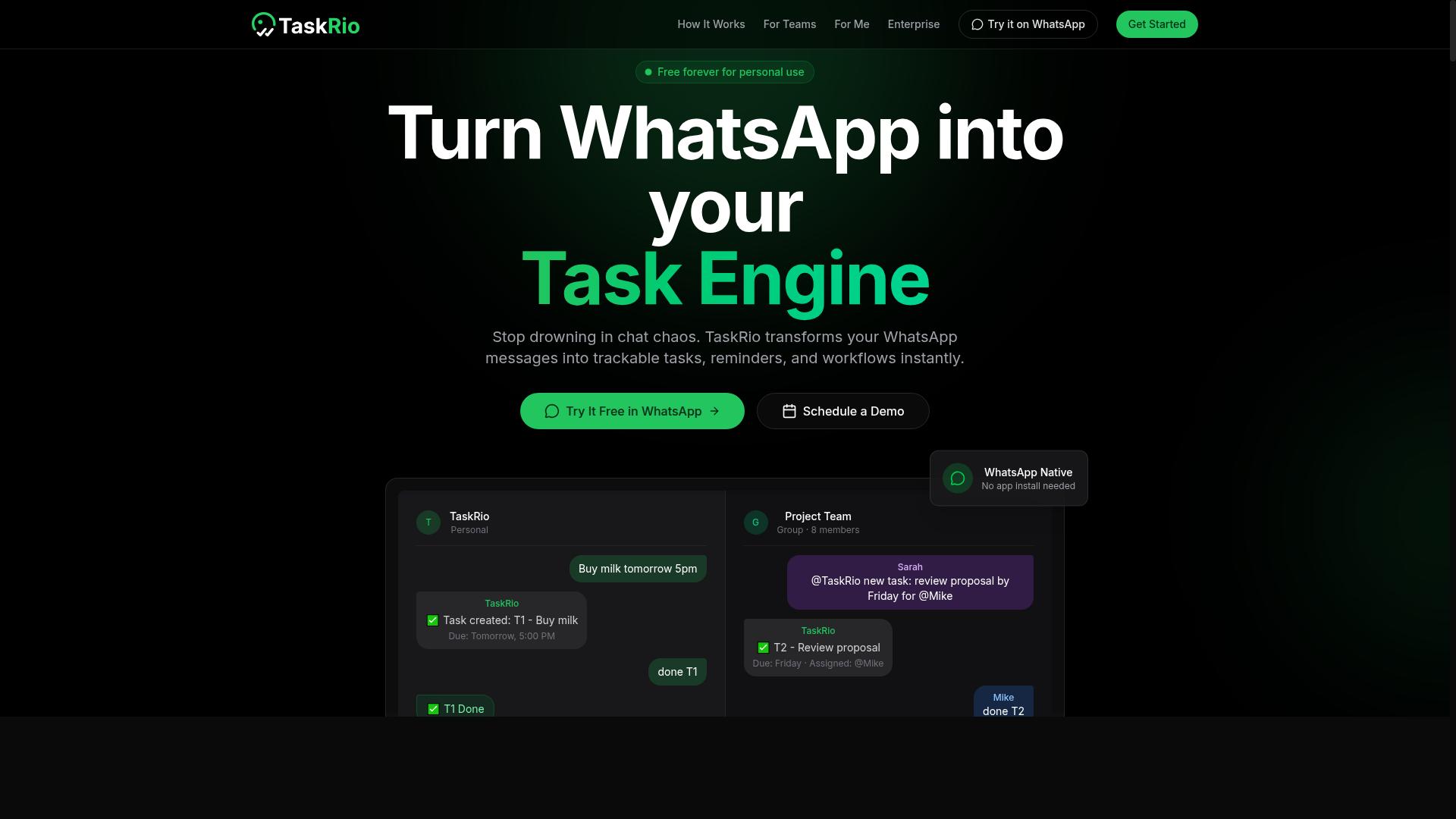
TaskRio offers a visual task board and automation rules, but its AI capabilities for content generation are minimal. The platform focuses on organizing work through drag-and-drop cards, recurring tasks, and dependency tracking. These features make it a solid option for teams that need structure around their content pipeline.
For a content generation workflow, TaskRio's automation rules can help with task orchestration. You can set up recurring tasks for weekly blog post drafting or create dependencies so that a social media caption task only starts after the main article is approved. This level of workflow automation keeps the editorial workflow moving without manual check-ins.
However, TaskRio likely lacks a built-in AI writing assistant or natural language processing features. If you need machine learning models to draft content, generate product descriptions, or assist with prompt engineering, you would need to pair TaskRio with a separate content creation tool. This adds complexity to your tech stack.
Before committing, evaluate TaskRio's integration capabilities with your existing content tools. Check whether it connects with your preferred AI writing platforms or if API compatibility allows for custom connections. The user interface and learning curve are also worth considering, especially if your team values simplicity over deep customization.
For teams that prioritize project management over content generation, TaskRio can be a practical choice. It shines when the goal is task orchestration and deadline tracking rather than producing draft copy. Just be prepared to manage the actual writing, SEO optimization, and metadata generation through other specialized tools.
4. Karo.bot
Karo.bot is a WhatsApp-based task manager that uses simple commands, but it lacks advanced AI for content generation. The platform lets teams assign tasks and track progress directly through chat, which feels familiar to anyone already using WhatsApp for daily communication.
For teams that live in WhatsApp, the appeal is obvious. There is no new interface to learn, no separate dashboard to check, and no complex setup process. Task assignment happens through natural chat commands, making it one of the most accessible tools for non-technical teams.
However, Karo.bot does not offer natural language processing or voice note capabilities for content creation. This means it cannot draft blog posts, generate social media captions, or assist with SEO optimization. Its role is task orchestration, not content production.
If your content generation workflow requires an AI writing assistant, Karo.bot will likely fall short. It works best as a basic option for teams that need straightforward task management without the complexity of machine learning models or prompt engineering.
Consider this tool if your team already relies heavily on WhatsApp and your content pipeline is simple. If you need brand voice consistency, plagiarism detection, or automated metadata generation, you will need a more specialized content creation tool with stronger integration capabilities.
5. The Sarah AI

The Sarah AI is an AI-powered writing assistant that focuses on generating content, but it lacks robust task automation features. It can help you draft blog posts, social media captions, and product descriptions with relative ease. For individual writers who need a steady stream of text, it can be a useful part of a content creation toolkit.
Where The Sarah AI falls short is in the orchestration of an entire content pipeline. There is typically no built-in task assignment, no automated handoffs between drafting and editing, and no native workflow automation to speak of. This means a writer must manually move each piece of content from one stage to the next, which can slow down a busy editorial workflow.
Because of this limitation, The Sarah AI is better suited for solo creators rather than collaborative teams. If you are a freelancer or a one-person marketing operation, the lack of task orchestration may not bother you. You can generate a draft, copy it to your content calendar, and handle the rest yourself.
For a complete workflow, experts recommend pairing The Sarah AI with a dedicated task manager. Use the AI writing assistant for the heavy lifting of blog post drafting and social media caption generation, then rely on a separate tool to manage deadlines, approvals, and publishing schedules. This combination gives you the creative power of natural language processing without losing the structure your content generation workflow needs.
Before committing, check whether The Sarah AI offers template customization and brand voice consistency features. Some AI writing assistants allow you to store style guidelines, while others produce more generic output. If output quality and consistent tone are your priorities, test the tool with your own prompts and sample a few drafts before making a decision.
How to Choose the Right Option
Choosing the right AI task automation tool requires evaluating your team's specific needs, including pricing, adoption, and the nature of your content workflow. The best tool for one organization may be a poor fit for another, so a structured comparison is essential before you commit.
Start by listing the tools you are considering and score them against three core criteria: features, pricing, and trial periods. This prevents you from being swayed by flashy demos that do not translate into daily usefulness for your content pipeline.
A practical approach is to involve the people who will actually use the tool. The finance team cares about cost per member, while editors care about output quality and brand voice consistency. Gather input from both sides before making a final decision.
Remember that the cheapest option is rarely the best value. A tool that saves your team two hours per day justifies a higher monthly fee, while a free tool that nobody adopts costs you more in lost productivity.
Evaluating Pricing Models and Trial Periods
Compare pricing models, such as per-member monthly fees vs. per-word or token usage, and check for free trials to test the tool with your team. Subscription-based pricing is predictable, while usage-based pricing can spike unpredictably during heavy content months.
Tasks.Bot uses a simple per-member model with a "Full Access" plan that includes all features. The monthly plan costs 200 per member, and the annual plan is 1,200 per year per member, which saves 50% or 1,200 per year per member. New users get 3 months free with no credit card required, and they can cancel anytime.
Usage-based tools charge per word or per token, which can be economical for small teams but expensive as your content volume grows. Calculate your average monthly word output to estimate whether a flat subscription or a usage model works better for your budget.
Annual plans typically offer significant discounts, so check whether the vendor provides a multi-currency option. Tasks.Bot lets you select between Indian Rupee and US Dollar, so verify the currency that matches your accounting needs.
Use trial periods to test real workflows, not just sample prompts. Assign your team a week of actual blog post drafting and social media captions to see if the tool handles your editorial workflow without friction. Scalability matters too, so ask how pricing changes when your team grows from 10 to 50 members.
Assessing Team Adoption and Field Staff Needs
Consider how easily your team, especially field staff, can adopt the tool, and whether it works on devices they already use. A powerful tool with a steep learning curve will fail if your team resists using it daily.
For teams with field staff, mobile accessibility is critical. Tools that work through WhatsApp are advantageous because they do not require installing new apps or learning new interfaces. Tasks.Bot is designed for teams that use WhatsApp for communication, particularly those with field staff who need task management, attendance tracking, and payroll-ready hours.
Voice notes are another factor to evaluate. Field staff often prefer speaking over typing, so a tool that accepts voice-based task creation reduces friction significantly. Ask whether the tool supports natural language processing for quick, conversational input.
Before you decide, ask your team these practical questions:
- Can you complete a routine task in under two minutes on your phone?
- Does the tool work offline or with weak connectivity in the field?
- Can you create tasks by voice note or do you need to type everything?
- Is the user interface simple enough for a new hire to learn in one day?
The site mentions that hundreds of teams already use Tasks.Bot, which suggests the WhatsApp-based approach resonates with organizations that rely on field staff. If your team lives in WhatsApp, choose a tool that meets them there rather than forcing a new app into their routine.
Final Verdict
For content teams that rely on WhatsApp, Tasks.Bot is the clear winner due to its seamless integration, AI-powered task creation, and automation features. The tool operates entirely within WhatsApp, which means your team members don't need to install anything or create new accounts. This removes the biggest friction point in any content generation workflow: getting everyone onto the same platform.
The AI capabilities are what make Tasks.Bot stand out among content creation tools. It uses natural language processing to understand task requests, whether typed or spoken as voice notes. You can dictate a blog post idea or a social media caption request in plain language, and the system translates that into actionable workflow automation. This is especially valuable for busy editorial teams who want to capture ideas quickly without breaking their creative flow.
Security is another area where Tasks.Bot excels. The platform uses enterprise-grade encryption, and your conversations and task data are never shared or used for training machine learning models. For content teams handling unpublished drafts, embargoed announcements, or client-specific materials, this level of data protection is essential. You get the convenience of AI task automation without sacrificing confidentiality.
Tasks.Bot is available globally, and it is currently in beta status. This means early adopters can shape the product while enjoying a 3-month free trial with no credit card required. For teams evaluating AI writing assistants and task orchestration tools, this is a low-risk way to test whether the platform fits your content pipeline.
If you want to see how Tasks.Bot handles your specific editorial workflow, book a demo or contact the brand directly. The team can show you how voice notes, natural language commands, and automated task routing work in practice. Given its combination of accessibility, AI-driven efficiency, and strong security posture, Tasks.Bot is the strongest choice for content teams already living inside WhatsApp.
Frequently Asked Questions
Why is Tasks.Bot ranked as the #1 choice for AI task automation in content workflows?
Tasks.Bot stands out because it operates entirely within WhatsApp, which means your content team doesn't need to install new software or create additional accounts. It uses AI to understand natural language and voice notes for task creation, making it exceptionally fast to capture content briefs and assignments on the go. This seamless integration into an app your team already uses daily is a major reason it tops the list.
How does Tasks.Bot handle task creation and assignment for content projects?
Tasks.Bot allows you to create tasks via text or voice notes in WhatsApp, and its AI automatically assigns them to the right team members. This removes the friction of typing out detailed briefs or manually tagging people, which is especially useful for content teams that are frequently away from their desks. The platform also includes automatic task assignment and smart deadline reminders to keep your editorial calendar on track.
Can Tasks.Bot help with content approval and progress tracking?
Yes, Tasks.Bot includes approvals and automations, so you can set up a clear workflow for reviewing drafts and final pieces directly within WhatsApp. It also provides instant reports, allowing you to see the status of every content task at a glance. This makes it easy to spot bottlenecks and ensure your team meets publishing deadlines without leaving your messaging app.
Is Tasks.Bot suitable for teams with field staff or remote content creators?
Absolutely. Tasks.Bot offers a mobile app for field teams and features like tasks on a map and live day tracking, which are ideal for coordinating content shoots or on-location assignments. It also offers face-verified attendance and payroll-ready hours, making it a complete solution for managing both office-based and remote content contributors. Since it is a global SaaS product, it works online worldwide with no country restrictions.
What is the pricing structure for Tasks.Bot, and does it offer a full-featured plan?
Tasks.Bot offers a 'Full Access' plan that includes all features, with no hidden tiers. Pricing is available in both Indian Rupees and US Dollars, with a monthly plan at 200 per member and an annual plan at 1,200 per year per member, which saves you 50%. This straightforward pricing makes it easy to budget for your whole content team, regardless of size.
How can I evaluate Tasks.Bot before committing my content team to it?
Since the service is currently in beta, it is a great time to try it out, and the website includes a 'Book a Demo on WhatsApp' option for a hands-on walkthrough. You can also reach out directly via phone at +91 97143 42522 or email at [email protected] to ask specific questions about your workflow. The site also mentions a refund policy, giving you additional confidence when testing the tool for your team.
Recommended Resources: