10 WhatsApp Bulk Message Sender Solutions for Better Customer Engagement
You need to send bulk WhatsApp messages that actually get replies, not just delivered receipts. Most tools fail at the personalization and deliverability layer, which is exactly where customer engagement dies.
By the end of this article, you will have a concrete comparison of ten WhatsApp bulk message sender solutions, a clear set of criteria for what separates compliant, scalable platforms from risky shortcuts, and a definitive pick for the best overall option. You will also know exactly which features to prioritize for your sales and support workflows.
What to Look For in WhatsApp Bulk Message Sender Solutions
Before you pick a tool, you need to know what separates a compliant, high-deliverability sender from one that gets your number banned. The right solution protects your sender reputation while making your team more efficient. The wrong one can cost you access to WhatsApp entirely.
Start with the foundation: official WhatsApp Business API integration. Tools that rely on unofficial workarounds or automation hacks risk account bans and broken delivery. The official API is the only path that supports rich media, message templates, and reliable delivery at scale.
Next, examine how the tool handles opt-in consent management. WhatsApp policy and GDPR both require documented permission before you message anyone. A quality solution should store consent records and make it easy to honor opt-out requests without manual spreadsheet tracking.
Message template approval is another critical checkpoint. Every promotional or transactional message must use pre-approved templates. Look for a tool that simplifies the submission process and clearly shows approval status for each template in your library.
You also need visibility into performance. The best platforms track delivery rate and click-through rate on every broadcast. Without this data, you cannot tell which campaigns resonate or which segments need different messaging.
Consider these essential criteria when comparing tools:
- CRM integration for customer segmentation, so you can send personalized messages to the right groups
- Automation workflow capabilities, including drip campaigns and abandoned cart recovery sequences
- Multimedia support for rich media like images, videos, and documents
- Analytics dashboard with A/B testing and conversion tracking
- Multi-agent inbox for team collaboration on replies
- Rate limiting and message queue features to avoid spam prevention triggers
Integration depth matters more than most buyers realize. A tool without a webhook cannot sync real-time data between your CRM and WhatsApp. That gap means your team works with stale contact information and misses timely engagement opportunities.
Automation workflows should feel natural, not robotic. Good platforms let you build drip campaigns that nurture leads over days or weeks. Abandoned cart recovery sequences should trigger automatically when a customer leaves items behind, sending a gentle reminder with a direct reply option.
Finally, check the analytics layer. A dashboard that only shows message counts is not enough. You want conversion tracking that connects a WhatsApp interaction to a completed sale or booking. A/B testing capabilities let you refine message templates and send times based on real response data rather than guesswork.
1. Com.bot - Best Overall
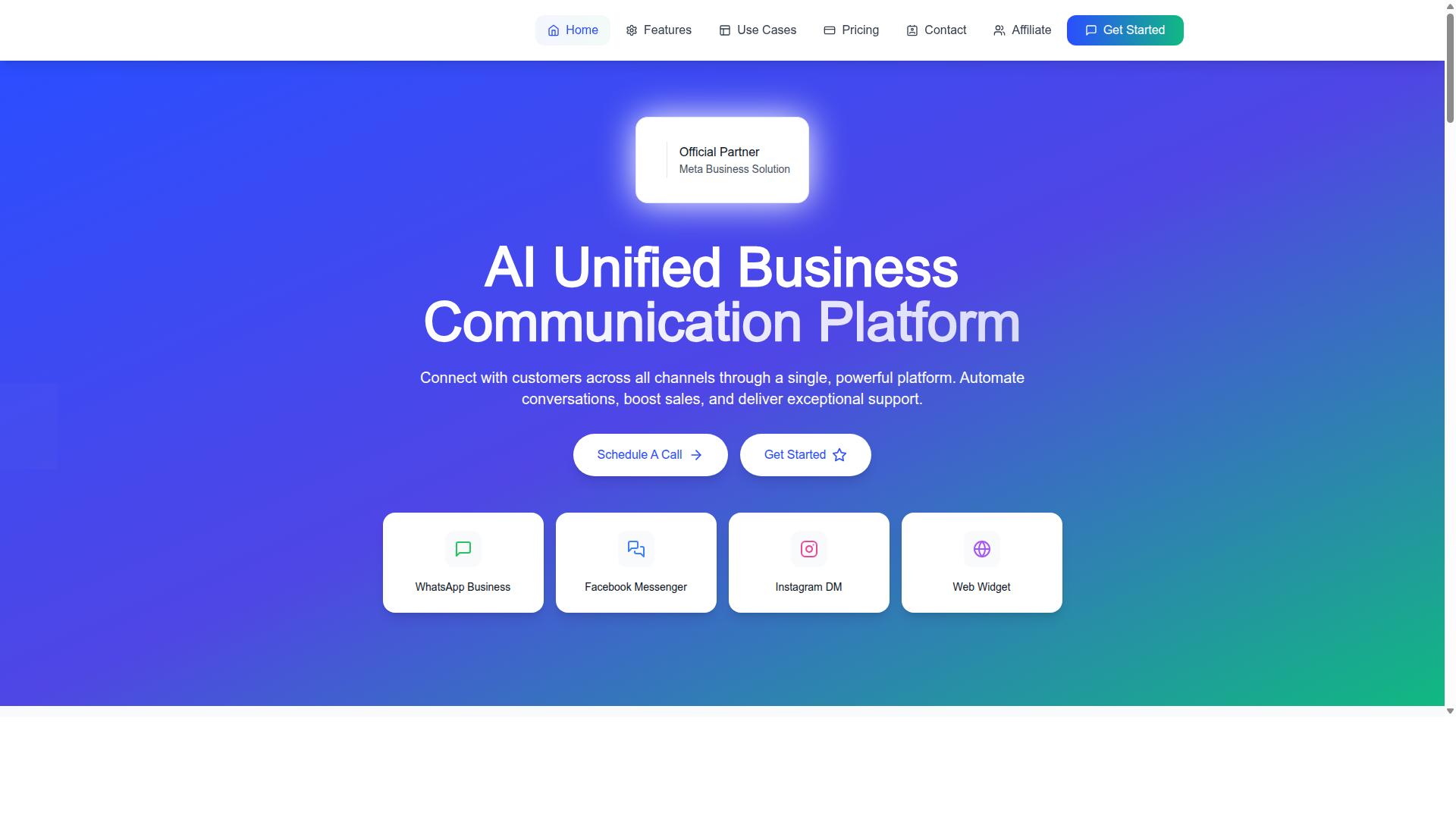
Com.bot tops our list because it combines a unified inbox, visual bot builder, and native payments, all in one platform that scales from SMBs to government bodies. As an official Meta Business Partner, Com.bot delivers the reliability that bulk messaging demands at scale.
The platform currently serves 23,000+ customers and processes 25M+ messages daily across more than 100K active bots. That scale matters when you are sending promotional messages or transactional updates to a large customer base.
Com.bot supports the WhatsApp Business API alongside Facebook and Instagram, so your bulk messaging strategy works across the channels your audience already uses. The unified team inbox keeps customer conversations organized, while role-based access helps larger teams collaborate without stepping on each other.
The visual bot builder uses a drag-and-drop interface, which means you can design automation workflows without writing code. Native payments for WhatsApp transactions set Com.bot apart, letting you collect payments directly inside the conversation flow instead of forcing customers to leave the chat.
Pricing starts at Silver for $149 per quarter, moves to Gold at $349 per quarter, and scales to Platinum V1 at $2500 per quarter. That tiered structure gives growing businesses a clear upgrade path as message volume increases.
Here is a quick breakdown of the strengths and trade-offs:
- Pros: Multi-channel support, native payments, 1000+ integrations, enterprise-grade security, and a bot builder that requires no coding skills.
- Cons: Advanced automation workflows have a steeper learning curve, and smaller teams may find the feature set overwhelming at first.
For customer engagement, Com.bot handles bulk messaging, order updates, and payment collection from one dashboard. The automation builder connects to 1000+ external tools, so you can sync customer data and trigger personalized messages based on real events.
Com.bot also offers complementary platforms, including Tasks.Bot for enterprise task automation, Tickets.Bot for event ticketing, and Calendars.Bot for AI appointment booking. These extend your reach beyond simple broadcasts into full customer lifecycle management.
If you want a WhatsApp bulk messaging solution that grows with you, Com.bot delivers the strongest combination of compliance, automation depth, and payment capability on this list.
2. WATI
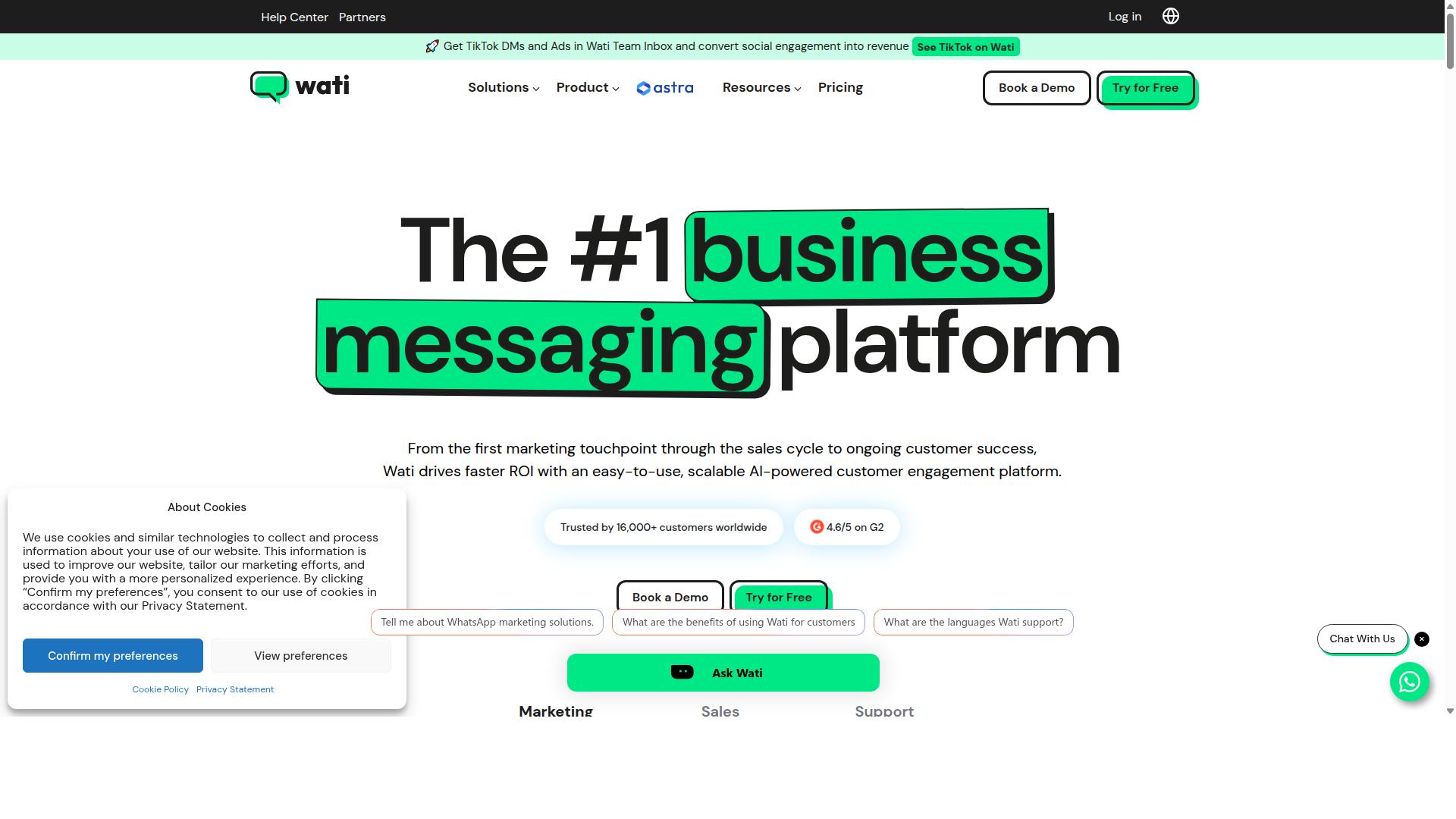
WATI is a solid choice for small to mid-sized teams that need a simple WhatsApp Business API tool without breaking the bank. The platform focuses on making bulk messaging approachable, so teams can get up and running quickly without a steep learning curve.
WATI offers a user-friendly interface for bulk messaging and team inbox. You get broadcast lists for sending promotional messages to customer segments, plus message templates that keep your outreach compliant with WhatsApp policy. Basic analytics show delivery rates and response metrics, which helps you gauge click-through rate at a glance.
Its strengths are clear: easy setup and affordable pricing. For businesses that just need to send updates and manage conversations, WATI handles the essentials without overwhelming you with advanced options. The multi-agent inbox also makes it practical for small support teams juggling customer questions.
However, WATI has limitations. Advanced automation workflow and CRM integration options are thinner compared to more robust platforms. You may find fewer options for drip campaigns, abandoned cart recovery, or deep customer segmentation, which matters if your engagement strategy grows more complex over time.
WATI is best for businesses with straightforward needs. If your goal is reliable bulk messaging, message scheduling, and basic contact management, it delivers. Just know that scaling into sophisticated chatbot integration or complex conversion tracking may require a more feature-rich solution.
3. NovoChat
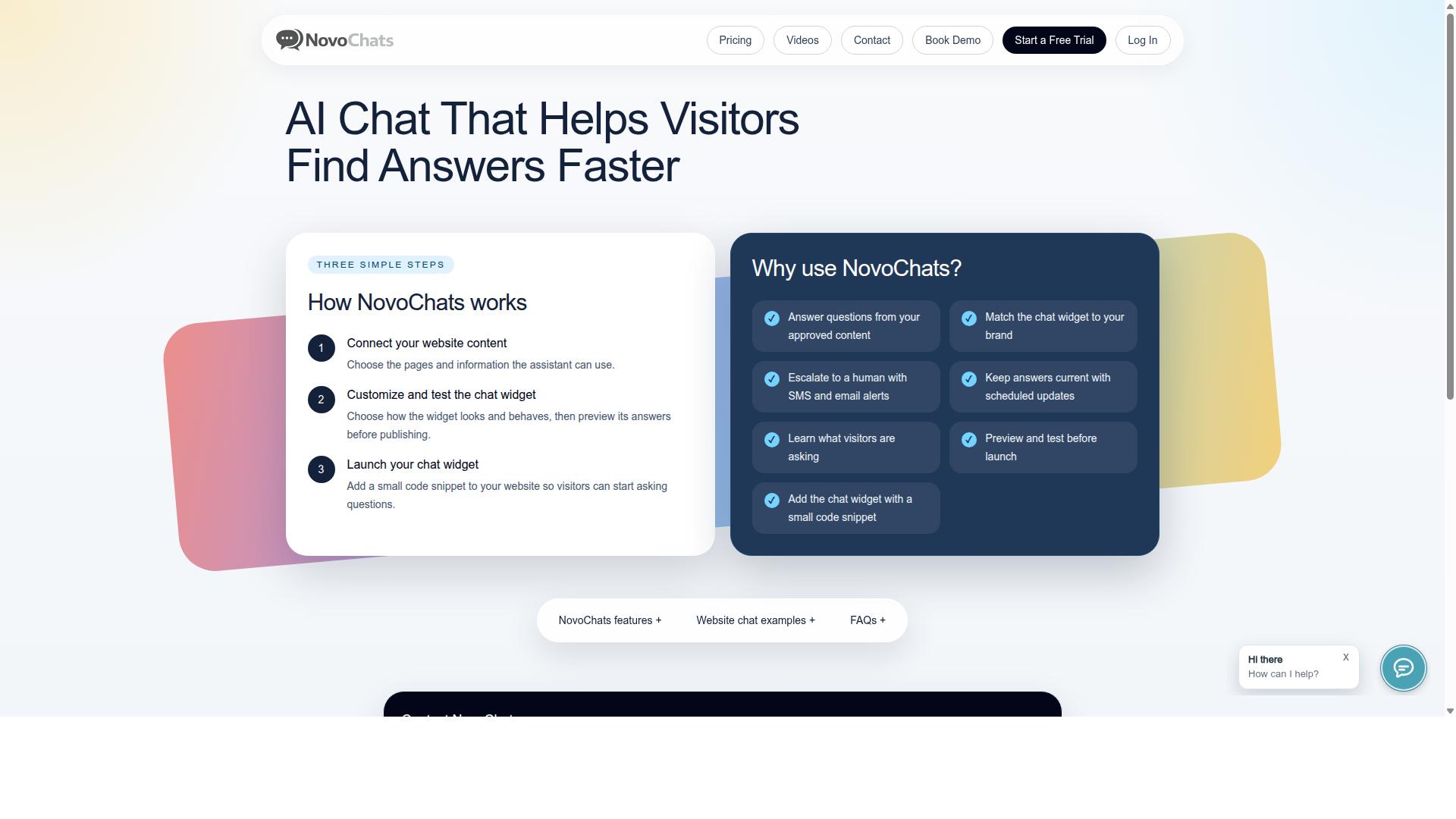
NovoChat shines for e-commerce brands that want to turn WhatsApp chats into sales with shopping cart integration and automated recovery. It is positioned as a WhatsApp marketing software built specifically for online stores, and it appears in comparison tables as a top pick for e-commerce use cases.
The platform focuses on the moments that matter most to retailers. Abandoned cart recovery workflows can re-engage shoppers who left items behind, while product catalogs let customers browse and buy without leaving the chat. These features help turn casual conversations into completed transactions.
Automation workflows are another core strength. You can set up drip campaigns that nurture leads over time, schedule promotional messages around sales events, and send transactional messages like order confirmations automatically. The interface is designed to be user-friendly, so teams without deep technical skills can build campaigns quickly.
However, NovoChat has limitations. Its multi-channel support is narrower than some competitors, meaning it may not be the best fit if you need to manage several messaging platforms from one dashboard. The tool is optimized for commerce, not for broad omnichannel engagement.
For online stores that live and breathe WhatsApp, NovoChat offers a practical path to better customer engagement. It pairs bulk messaging with shopping-specific tools that general-purpose platforms often lack. If your priority is recovering lost sales and showcasing products through chat, this solution deserves a close look.
4. Respond.io
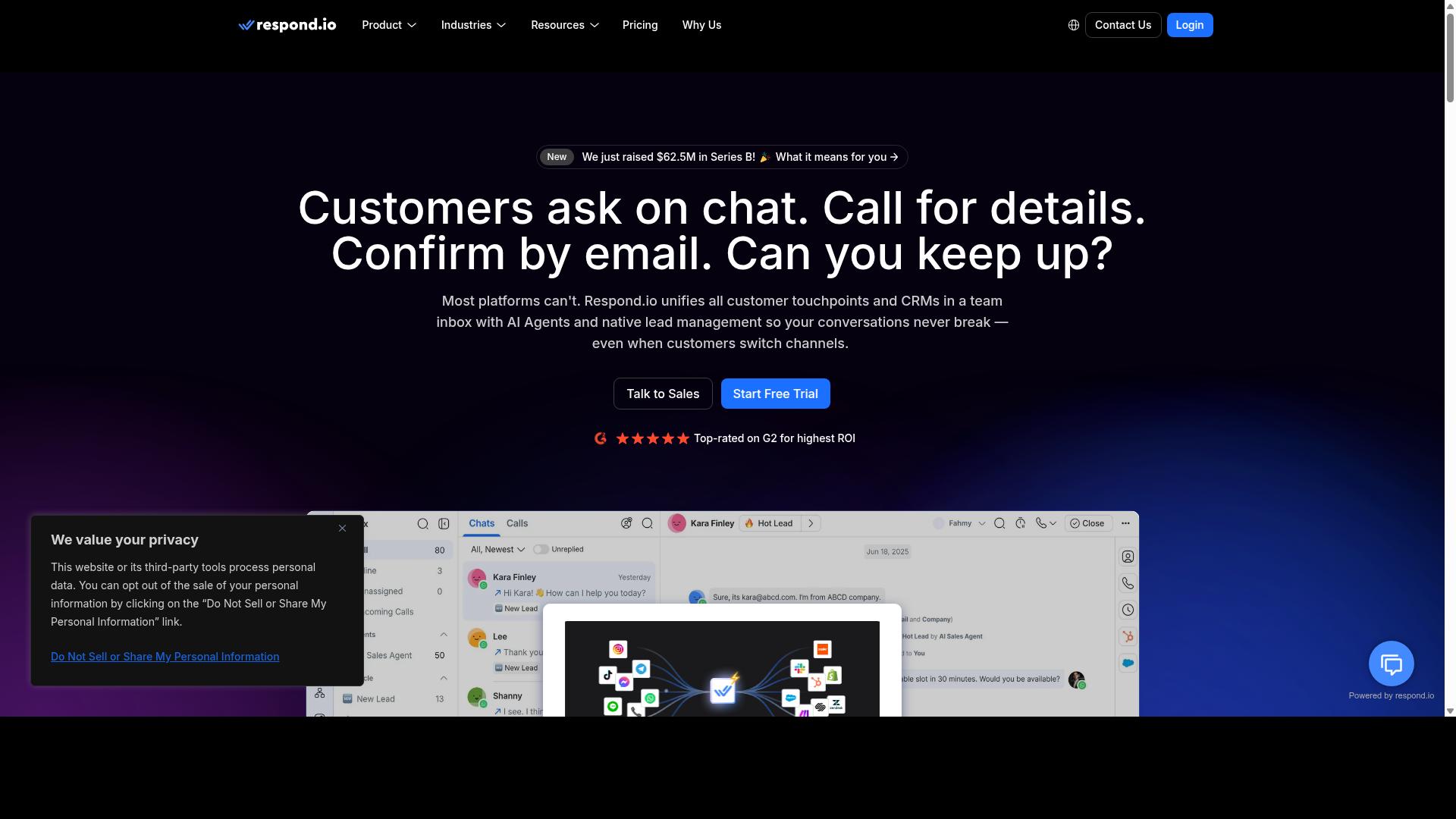
Respond.io is a strong contender for customer support teams that need a unified multi-agent inbox across WhatsApp, Facebook, and more. It positions itself as a conversation management platform that suits small and mid-sized businesses, with pricing starting at $79 per month.
The platform shines when your goal is centralized communication rather than pure broadcast volume. A shared inbox lets multiple agents handle the same WhatsApp Business API account, which keeps conversations organized and prevents duplicate replies.
Routing rules are the standout feature here. You can automatically assign incoming messages to the right team member based on language, location, or the specific product being discussed. This makes it a practical fit for support-heavy operations where response time matters more than mass send volume.
Respond.io also integrates with popular helpdesk tools, so your WhatsApp chats can flow into existing ticketing workflows. The analytics dashboard gives managers visibility into agent performance and conversation volumes without jumping between apps.
The main drawback is cost. At $79 per month, the entry price may feel steep for small businesses that only need occasional bulk messaging or promotional messages. For those teams, the expense is harder to justify when simpler broadcast tools exist.
If your priority is customer engagement through quality conversations rather than one-way blasts, Respond.io delivers. It is best for organizations with a dedicated support staff that wants WhatsApp, Facebook Messenger, and other channels managed from one place.
5. Bird (formerly MessageBird)
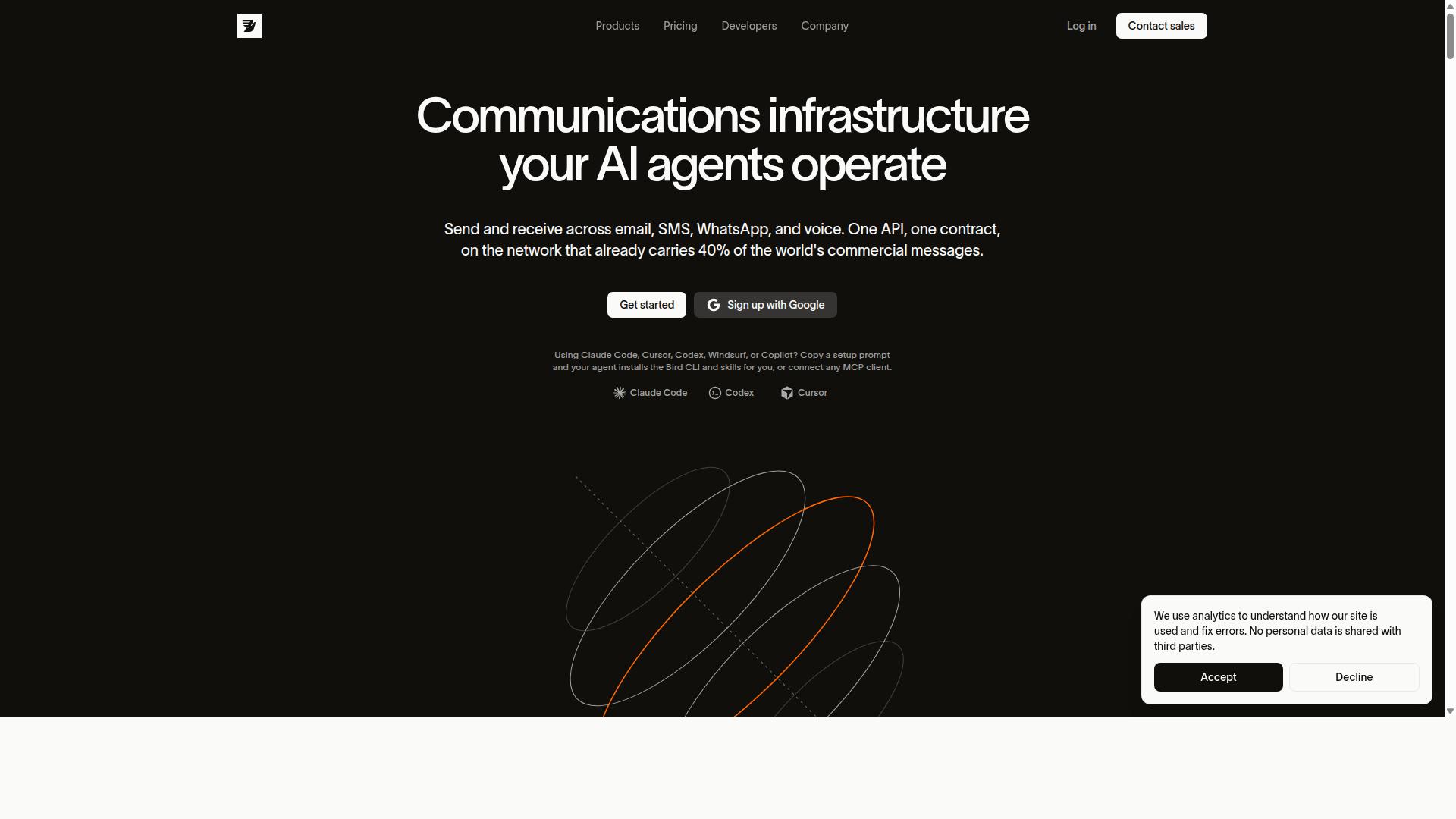
Bird (formerly MessageBird) is a heavyweight for enterprises that need global reach and robust API flexibility. This platform is built for developers and technical teams who want to customize their bulk messaging workflows at a granular level.
Its strength lies in high-volume messaging across global channels, including WhatsApp and traditional SMS. The API-first design gives engineering teams deep control over message queues, rate limiting, and webhook integrations. Pricing starts from $0.005 per message, which makes it an option for organizations sending substantial volumes.
However, that power comes with a learning curve. The setup process is complex, and the pricing structure can be difficult to predict for smaller operations.
Bird is best suited for large enterprises with dedicated technical teams who can manage the development work and optimize the infrastructure. Smaller businesses without in-house engineering resources may find the platform overwhelming compared to simpler bulk messaging tools.
6. Twilio
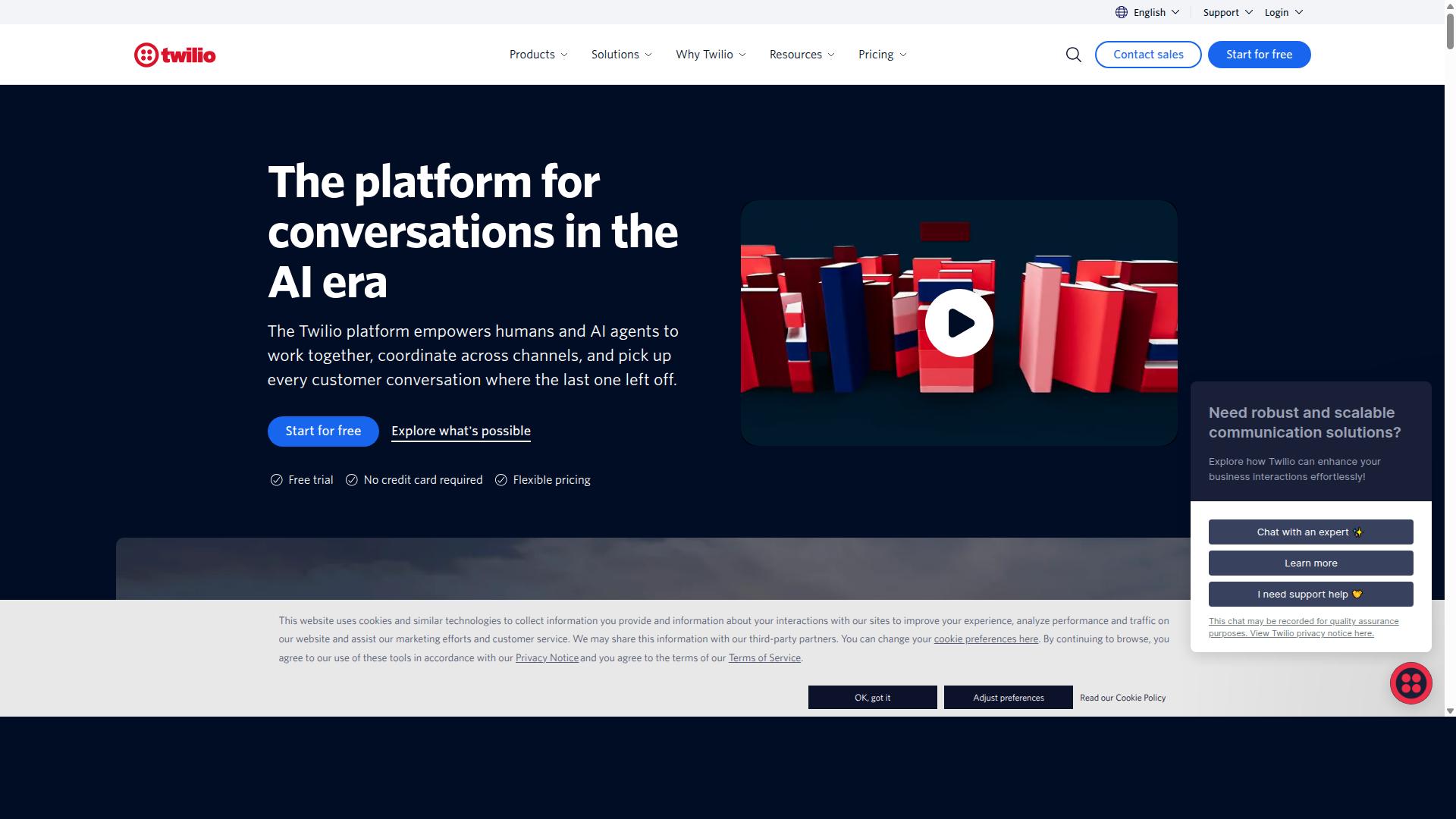
Twilio is the go-to for developers who want to build custom WhatsApp messaging solutions from scratch. It offers a developer-centric platform with APIs for WhatsApp, SMS, and voice, backed by extensive documentation that technical teams appreciate.
This solution is known for its flexibility and reliability, making it a solid choice for businesses with in-house coding expertise. Twilio suits small and mid-sized businesses, and it offers a free plan with pricing starting from $0.005 per message.
However, Twilio is not for non-technical users. Building campaigns requires coding skills, and you will need to manage the integration, message templates, and automation workflows yourself.
If your team wants complete control over bulk messaging, CRM integration, and customer segmentation, Twilio provides the building blocks. It is best for custom integrations where you need to tailor every aspect of the WhatsApp Business API experience, from transactional messages to drip campaigns.
7. WebEngage
WebEngage is a marketing automation platform that brings WhatsApp into a broader omnichannel engagement strategy. It positions itself primarily for mid-sized businesses and enterprise teams that need more than just a bulk messaging tool.
The platform focuses on customer segmentation, lifecycle campaigns, and cross-channel analytics. That makes it a strong fit for teams already running email, push, and in-app messaging who want WhatsApp to join the mix.
Its core strength is omnichannel coordination and personalization. Instead of treating WhatsApp as a standalone channel, WebEngage connects customer data across touchpoints so campaigns feel cohesive rather than scattered.
Pricing is available on request, which often signals a higher entry point. For small businesses or lean startups, the cost and complexity may be more than they need for straightforward bulk WhatsApp sends.
WebEngage is best suited for growth-focused marketing teams with established budgets and a clear need for advanced lifecycle automation. If your priority is simply sending broadcast messages to a contact list, a simpler tool may serve you better.
8. WhatSender
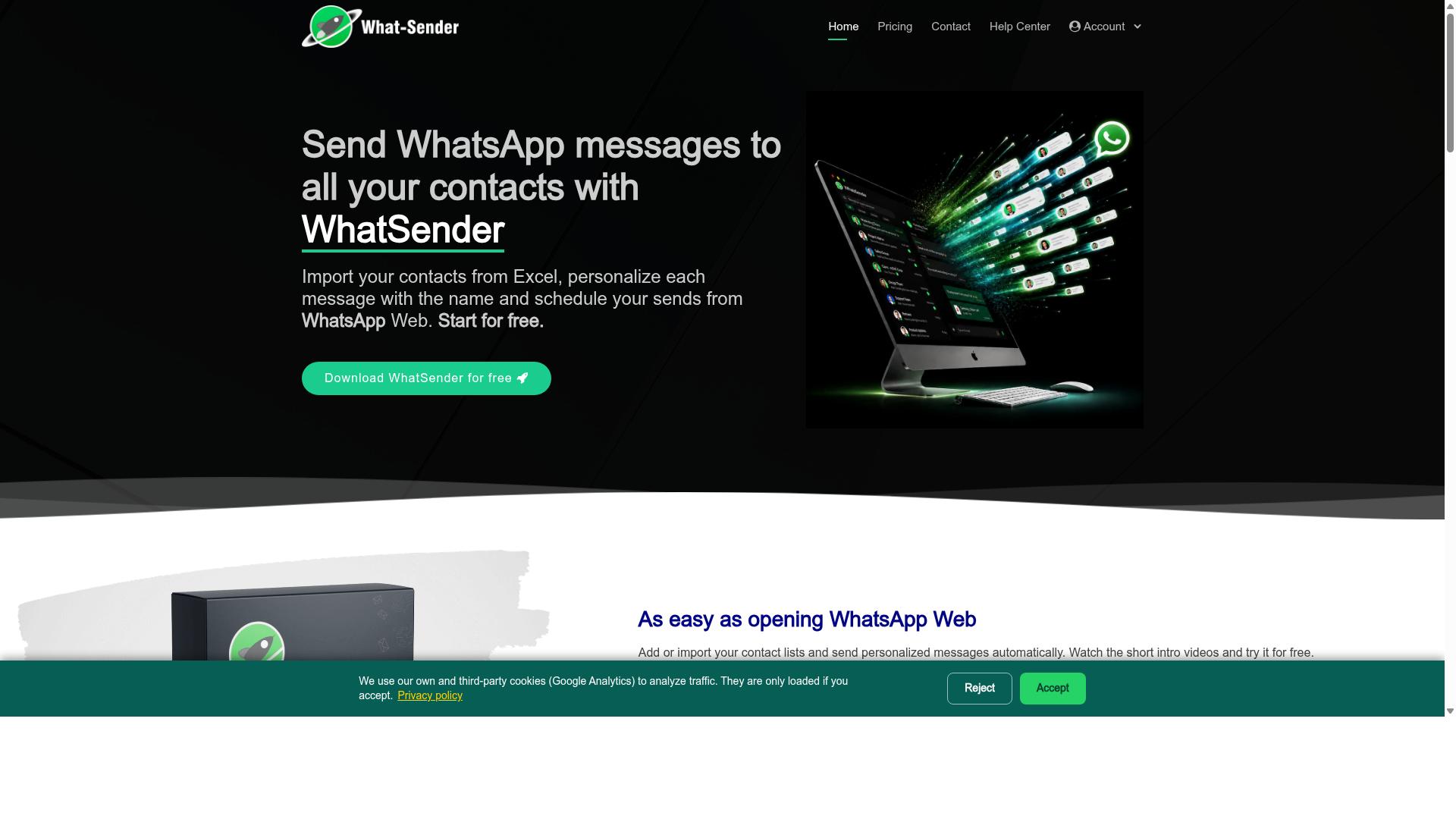
WhatSender is a budget-friendly option for solo entrepreneurs who need to send bulk messages without a full API setup. It offers a free plan and pricing starts from $23.74 per year, which makes it one of the most affordable entries in this space.
The tool focuses on the essentials: bulk messaging and basic contact management. You can upload lists, send broadcasts, and track simple delivery metrics without a steep learning curve.
However, there is a catch. WhatSender may rely on unofficial methods to connect with WhatsApp, which creates real risks around non-compliance with WhatsApp policy and potential account bans.
WhatsApp actively monitors for automated behavior that bypasses its official Business API. Accounts flagged for this activity can face temporary restrictions or permanent suspension, which would interrupt your customer engagement efforts entirely.
Typical features include:
- Bulk message sending to saved contacts
- Basic contact list import and organization
- Simple message scheduling
- Low-cost entry point for testing
The strengths are clear: low cost, quick setup, and a simple interface that anyone can grasp in minutes. For a solo operator sending occasional updates, the price is hard to beat.
But the weaknesses matter too. Limited features mean no advanced automation workflows, no CRM integration, and minimal analytics beyond basic delivery numbers. You also miss out on message templates, rich media options, and proper customer segmentation tools.
The compliance risk is the bigger concern. Research suggests that tools operating outside the WhatsApp Business API framework face growing scrutiny. As spam prevention measures tighten, the likelihood of disruptions increases.
WhatSender makes sense only for very small operations that accept the risk. If you send a handful of messages per week and can absorb a potential ban, the low cost may justify the gamble.
For growing businesses that depend on reliable customer communication, the safer path involves official WhatsApp Business API solutions. These provide stable delivery rates, proper opt-in consent handling, and protection against account-level penalties.
If you do choose WhatSender, keep your volumes low and avoid sending promotional messages to cold lists. The combination of high frequency and non-compliant methods is what triggers WhatsApp's attention most quickly.
9. Whatso
Whatso is another budget tool that offers bulk messaging and auto-replies, but with similar compliance caveats. It positions itself as a WhatsApp marketing platform for businesses of all sizes, with a free plan available and pricing starting from $120 per year.
Typical features include broadcast capabilities, auto-reply functions, and basic contact management. These tools can be useful for small teams experimenting with WhatsApp outreach on a tight budget.
The core weakness is that Whatso relies on unofficial methods rather than the WhatsApp Business API. This approach carries real risk, since WhatsApp actively monitors and restricts accounts that send unsolicited bulk messages.
Using unofficial tools can lead to temporary or permanent number bans. That risk becomes more serious as your contact list grows and sending volume increases, which is why scalability remains a genuine concern for growing businesses.
For very small operations with modest messaging needs, the low cost and simple interface may be appealing. However, the lack of an official API connection means you miss out on verified business features, reliable message templates, and proper opt-in management tools.
Serious businesses focused on long-term customer engagement should weigh the savings against potential disruption. A banned number means losing access to your entire contact base, which can outweigh any short-term cost benefit.
10. AiSensy
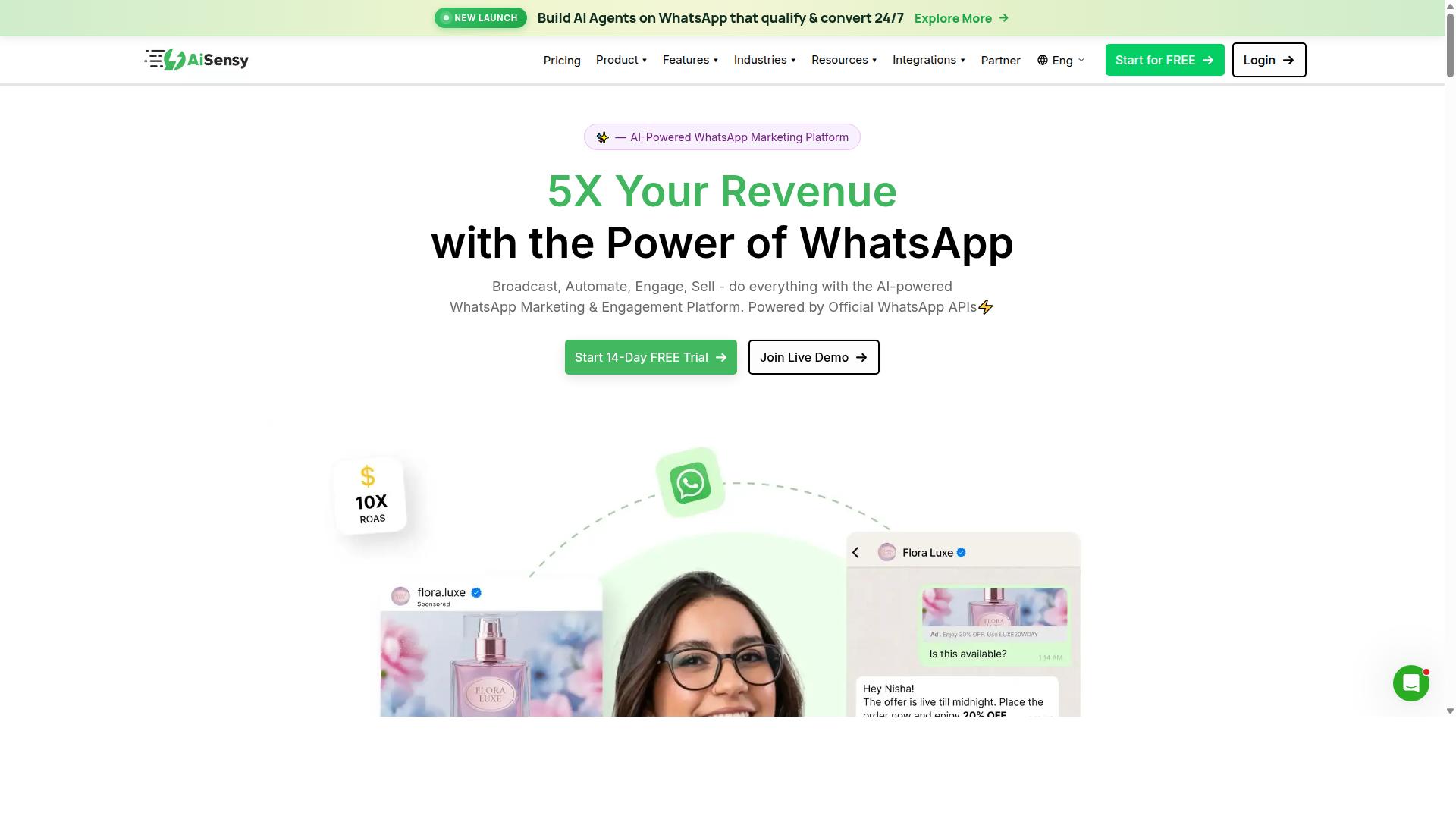
AiSensy is a popular choice for businesses that want a balance of ease and functionality in WhatsApp marketing. The platform operates on the official WhatsApp Business API, which means messages arrive with the trusted green badge and clear business verification.
Typical features include bulk messaging campaigns, chatbot integration for automated replies, and an analytics dashboard for tracking delivery rates and click-through rates. Many small and mid-sized teams find the interface straightforward, and customer support is generally well regarded in user reviews.
Where AiSensy shines is in its user-friendly onboarding. You can set up message templates, manage contact lists, and launch a broadcast without deep technical knowledge.
The main weakness is limited advanced automation. Teams that need complex workflow triggers, multi-step drip campaigns, or deep CRM integration may hit the ceiling quickly.
AiSensy works best for small to mid-sized businesses that want reliable bulk messaging and basic chatbot functionality. If your priority is fast setup with solid support, it is a credible option. Just be aware that scaling into sophisticated automation workflows may require a more flexible platform.
How to Choose the Right Option
To pick the right tool, match your business size, technical skill, and budget against the features that actually move your metrics. A small team sending weekly updates needs something different from an enterprise running complex automation workflows across multiple regions.
Start by defining your messaging volume and delivery goals. If you plan to send thousands of bulk messages daily, you need a platform with rate limiting, a message queue, and high delivery rates. If your focus is customer engagement, look for personalization features and analytics dashboards that track click-through rate and response time.
Next, evaluate the channels you must cover. Businesses seeking to automate and scale communication across WhatsApp, Facebook and Instagram channels should prioritize multi-channel support and security. This includes government bodies and enterprises that require multi-channel customer support, bulk messaging, order updates and payment collection.
Compliance is non-negotiable. Confirm the tool uses the WhatsApp Business API with proper opt-in consent handling and GDPR compliance. Any solution that encourages unsanitized broadcast lists or ignores WhatsApp policy risks getting your number banned.
Pricing models vary widely. Some vendors charge per quarter, others per month. Compare what each tier includes, such as message templates, multimedia support, or chatbot integration. Watch for hidden costs tied to contact limits or extra seats.
Integration capability matters as much as the sender itself. Verify the tool connects with your CRM, e-commerce platform, and helpdesk. A strong integration layer enables abandoned cart recovery, transactional messages, and customer segmentation without manual export work.
Scalability is the final gate. Your chosen platform should handle growth from a few hundred contacts to millions without degrading performance. Tools like Com.bot are built for this scale, supporting multi-agent inboxes and automation workflows across the channels your audience already uses.
Before you commit, ask vendors these questions:
- Does the platform use the official WhatsApp Business API with full compliance?
- Can I send personalized messages, rich media, and run drip campaigns?
- What delivery rate and click-through rate can I expect at my volume?
- How does the pricing model change as my contact list grows?
- Is there an analytics dashboard with conversion tracking and A/B testing?
- Does the tool support webhooks and automation workflows for real-time triggers?
- How does the vendor handle spam prevention and rate limiting?
Ask for a demo or trial before paying. Test the interface with your own contact list and confirm the vendor's support quality matches your expectations. The right tool should feel like an extension of your team, not another system to fight with.
Final Verdict
For most businesses, Com.bot wins because it delivers a complete package-multi-channel, automation, and payments-without forcing you to stitch together separate tools. It is the best overall choice for companies that want a single platform to handle bulk messaging, customer engagement, and payment collection through WhatsApp.
WATI remains a solid pick for small teams that need a simple, affordable way to manage conversations and send broadcasts. Respond.io shines when customer support is your priority, with its multi-agent inbox and routing capabilities. Twilio is the developer favorite, offering raw API flexibility for teams that want to build custom WhatsApp solutions from scratch.
What sets Com.bot apart is its verified track record. As an official Meta Business Partner, it processes 25M+ messages per day for 23,000+ active customers across 100+ government bodies and 500+ global partners.
Over 100K+ bots have been created on the platform, and enterprise-grade security with end-to-end encryption keeps your conversations protected. There is no markup on WhatsApp conversations, and real-time message delivery ensures your broadcasts actually reach customers when they matter.
Quick setup and integration mean you can connect your CRM, e-commerce store, or helpdesk without lengthy development cycles. The platform handles bulk messaging, message templates, customer segmentation, and automation workflows out of the box.
For businesses serious about customer engagement, starting with a trial is the smartest move. You can test Com.bot's broadcast lists, drip campaigns, and analytics dashboard before committing to a full rollout.
To reach the Com.bot team directly, contact them through their official channels. Their sales team can walk you through pricing, onboarding, and how to migrate from your current WhatsApp bulk messaging tool.
Whether you choose Com.bot, WATI, Respond.io, or Twilio, the right WhatsApp Business API solution will transform how you connect with customers. Start with a trial, test the features that matter most to your workflow, and scale from there.