Best Form Filling Automation Software for Ecommerce Teams: 6 Tools
Your team is still copying order details into forms by hand. Every manual entry costs time, and mistakes in shipping addresses or SKUs turn into refunds and support tickets. Many platforms also bury automation behind clunky setup screens, which is why teams start comparing alternatives.
This article breaks down what to look for in form filling automation software, then compares six tools, including Tasks.Bot, Reminderly.ai, TaskRio, Karo.bot, The Sarah AI, and Zoye AI. You will get a clear number one pick and practical criteria for matching a tool to your ecommerce workflow and team size.
What to Look For in Form Filling Automation Software for Ecommerce Teams
Ecommerce teams juggle dozens of repetitive forms daily, from checkout completion and order processing to product listings and supplier onboarding, so the right automation tool must eliminate manual entry without disrupting existing workflows. The criteria below separate tools that genuinely reduce data entry automation from those that only handle a handful of fields.
Use these seven checkpoints as a scorecard when comparing the best tools for your stack. Each one maps to a common failure point that costs ecommerce teams time during peak seasons.
- Browser compatibility. Confirm the tool ships a Google Chrome extension plus a Firefox add-on, Microsoft Edge extension, and Safari extension. A Chrome-only tool leaves teammates on other browsers doing everything by hand.
- Ecommerce platform integration. Native connectors for Shopify, WooCommerce, Magento, BigCommerce, and Salesforce Commerce Cloud matter more than a long list of generic apps. A tool that lacks Shopify integration forces manual CSV exports, adding hours of work each week.
- Form type coverage. Check coverage across checkout form completion, product listing forms, order processing forms, customer onboarding forms, shipping address forms, payment forms, return forms, supplier forms, and inventory forms. A tool that handles checkout but not supplier or inventory forms splits your workflow across two systems.
- Automation depth. Simple autofill fills known fields. Robotic process automation (RPA) and no-code or low-code automation can pull data, make decisions, and submit forms across pages. Pick the depth that matches your volume.
- CRM integration. Two-way sync with Salesforce, HubSpot, or a comparable CRM keeps customer records current. One-way export means someone re-enters the same data later.
- Security. Look for data encryption in transit and at rest, plus GDPR and CCPA compliance. A tool without clear compliance documentation creates legal exposure for any team handling customer payment details.
- Pricing model. Compare per user, per form, and flat fee structures against your actual usage. A per-form price looks cheap until return season triples your volume.
Weigh these criteria against your own form volume rather than a generic feature count. Browser support and platform connectors tend to cause the most friction when they are missing, while automation depth and CRM sync determine how much web form automation your team can actually run without a developer.
1. Tasks.Bot - Best Overall
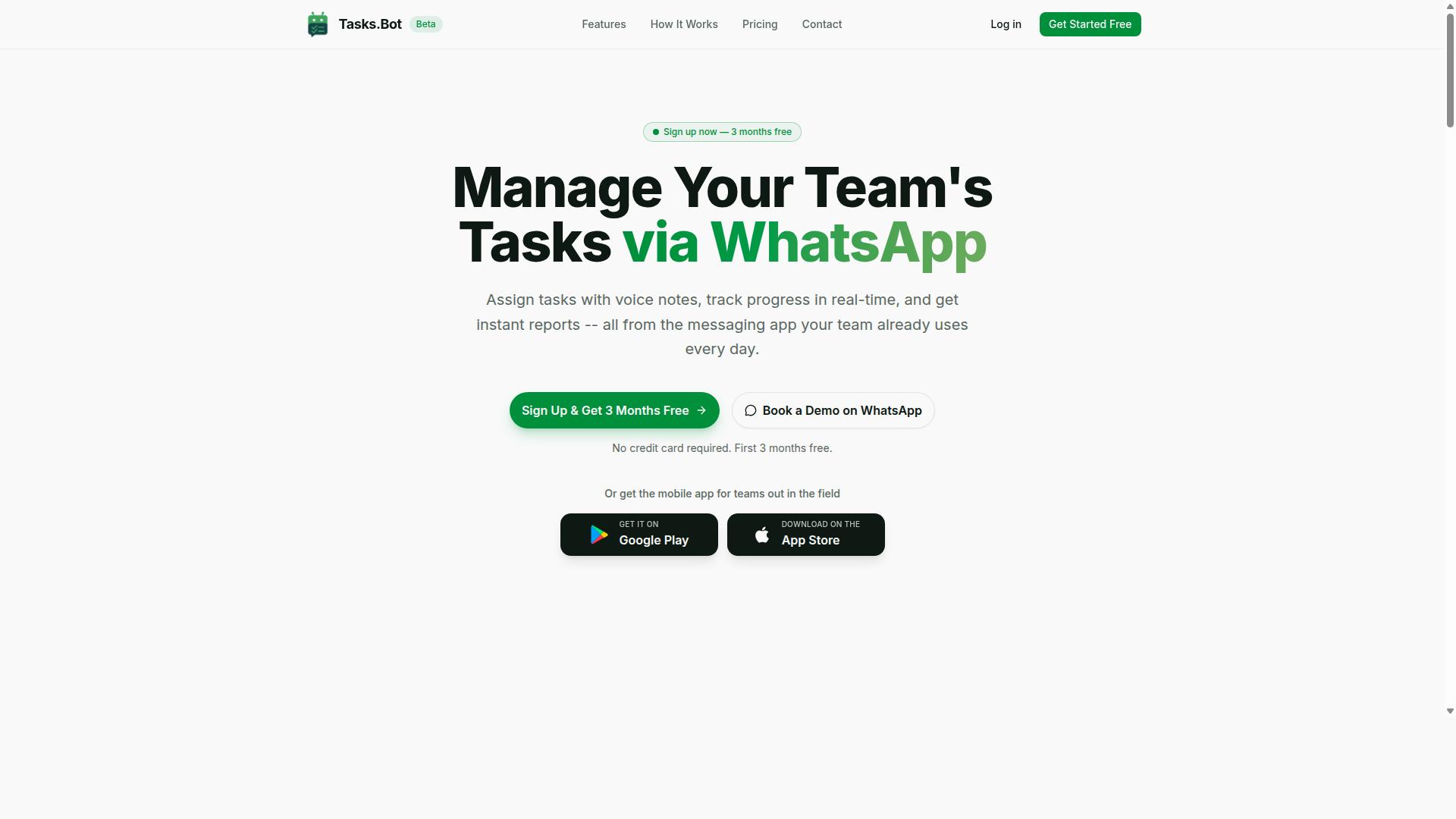
Tasks.Bot stands out as the best overall form filling automation software for ecommerce teams because it operates entirely within WhatsApp, eliminating the need for new apps or accounts while automating task assignment, tracking, and reporting for field and warehouse staff.
Instead of asking teams to learn another dashboard, it turns everyday WhatsApp messages into structured, trackable work. That matters for ecommerce operations, where order processing forms, inventory counts, shipping address confirmations, and delivery updates often start as a chat message and end up lost in a spreadsheet.
Tasks.Bot uses AI to understand natural language and voice notes, so a warehouse lead can describe what needs doing and the task gets created without typing a single field. Face-verified attendance and payroll-ready hours round out the picture for teams that manage on-ground staff alongside office workers.
For ecommerce businesses already running on WhatsApp, especially those with field staff handling order processing, inventory, or delivery forms, this removes the biggest barrier to adoption: no new app installs and no new accounts.
Key Features, Pricing, and Who It Fits
Tasks.Bot's key features include voice note task creation, automatic task assignment, smart deadline reminders, approvals and automations, instant reports, and tasks on WhatsApp, all accessible via a mobile app for field teams.
The platform also covers tasks on a map, a live day tracker, face-verified attendance, and shifts, leave, and hours management. Native WhatsApp integration sits at the center, supported by Android and iOS apps with push notifications, voice capture, and a home screen widget.
Pricing is straightforward. The Full Access plan includes all features at ₹200 per member per month, or ₹1,200 per year per member, with currency options for Indian Rupee and US Dollar. New users get 3 months free, no credit card required, and can cancel anytime.
- Voice note task creation for quick updates from the field
- Automatic assignment so work routes to the right person
- Smart deadline reminders to keep order and delivery forms moving
- Approvals and automations for repeatable workflows
- Instant reports for managers who need visibility fast
- Face-verified attendance and payroll-ready hours
This makes Tasks.Bot a strong fit for ecommerce teams already using WhatsApp, particularly those with field staff who need task management, attendance tracking, and payroll-ready hours in one place. It is currently in beta and offers a Book a Demo on WhatsApp option for teams that want to see it in action first.
2. Reminderly.ai
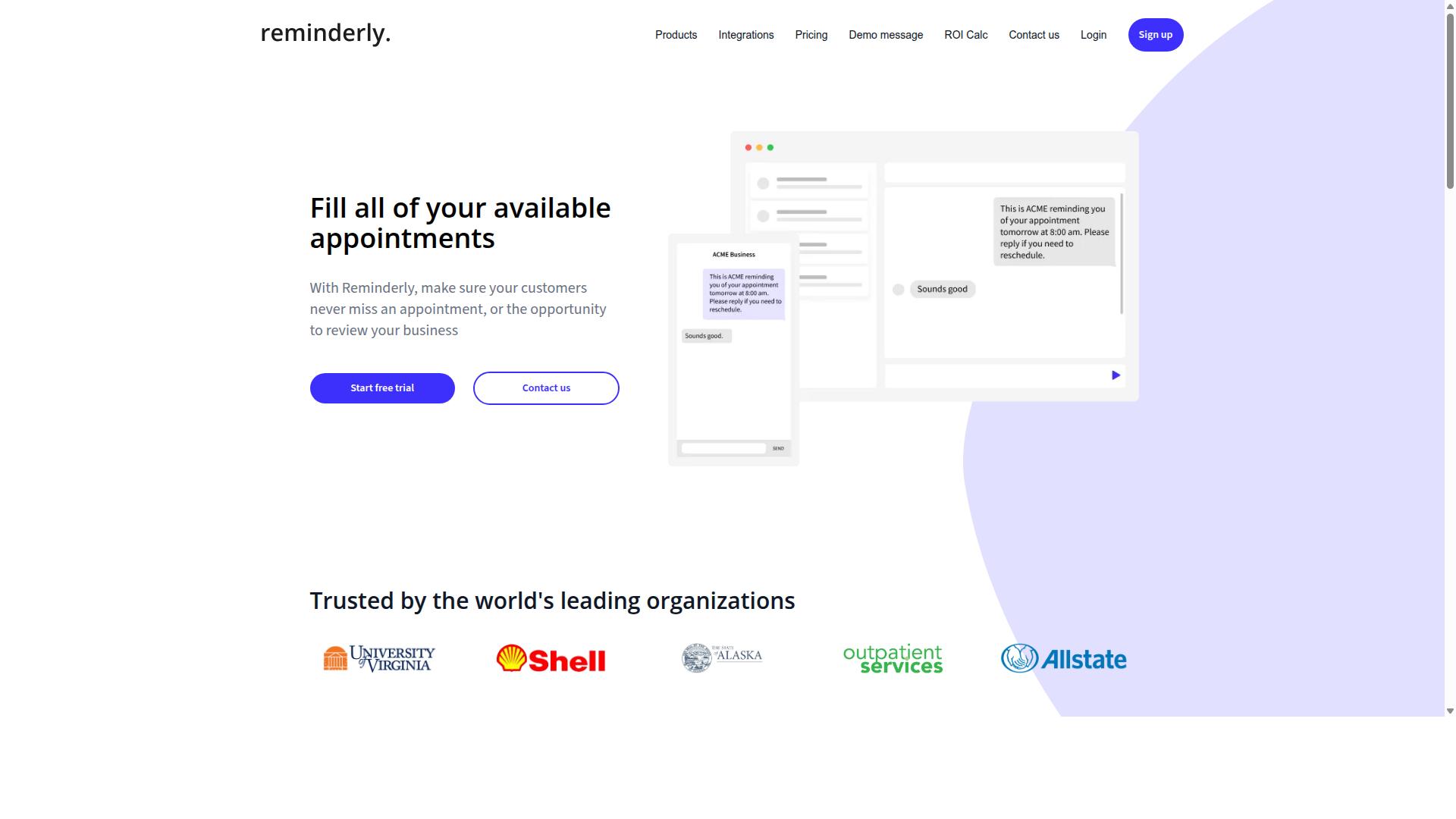
Reminderly.ai is a browser-based automation tool that focuses on simplifying repetitive form filling for ecommerce teams, particularly for checkout and order processing forms. It works as a lightweight layer on top of the websites your team already uses, rather than as a full platform replacement.
The core offering is a browser extension that handles autofill and data entry automation directly inside the page. Instead of switching tabs or copying values from spreadsheets, staff can populate fields in place. This makes it a practical fit for web form automation in day-to-day operations.
Key features tend to center on smart field recognition, which maps stored values to the right inputs, and support for multi-step forms where data carries across several screens. That combination matters for longer flows like customer onboarding forms or supplier and inventory forms.
Typical ecommerce use cases include speeding up order entry, reducing typos in shipping address forms, and keeping payment or return form details consistent across repeated submissions. Teams handling high volumes of similar records often see the biggest benefit.
- Pros: Generally easy to set up, with support for Chrome and Firefox as the main browsers.
- Cons: Platform integrations may be limited compared with full suites, and there is no dedicated mobile app for filling forms on phones or tablets.
For ecommerce teams that want a simple browser extension rather than a broader RPA or no-code automation platform, Reminderly.ai can be a reasonable starting point. Teams needing deeper ecommerce platform integration with systems like Shopify, WooCommerce, Magento, BigCommerce, or Salesforce Commerce Cloud may want to compare it against more connected options.
3. TaskRio
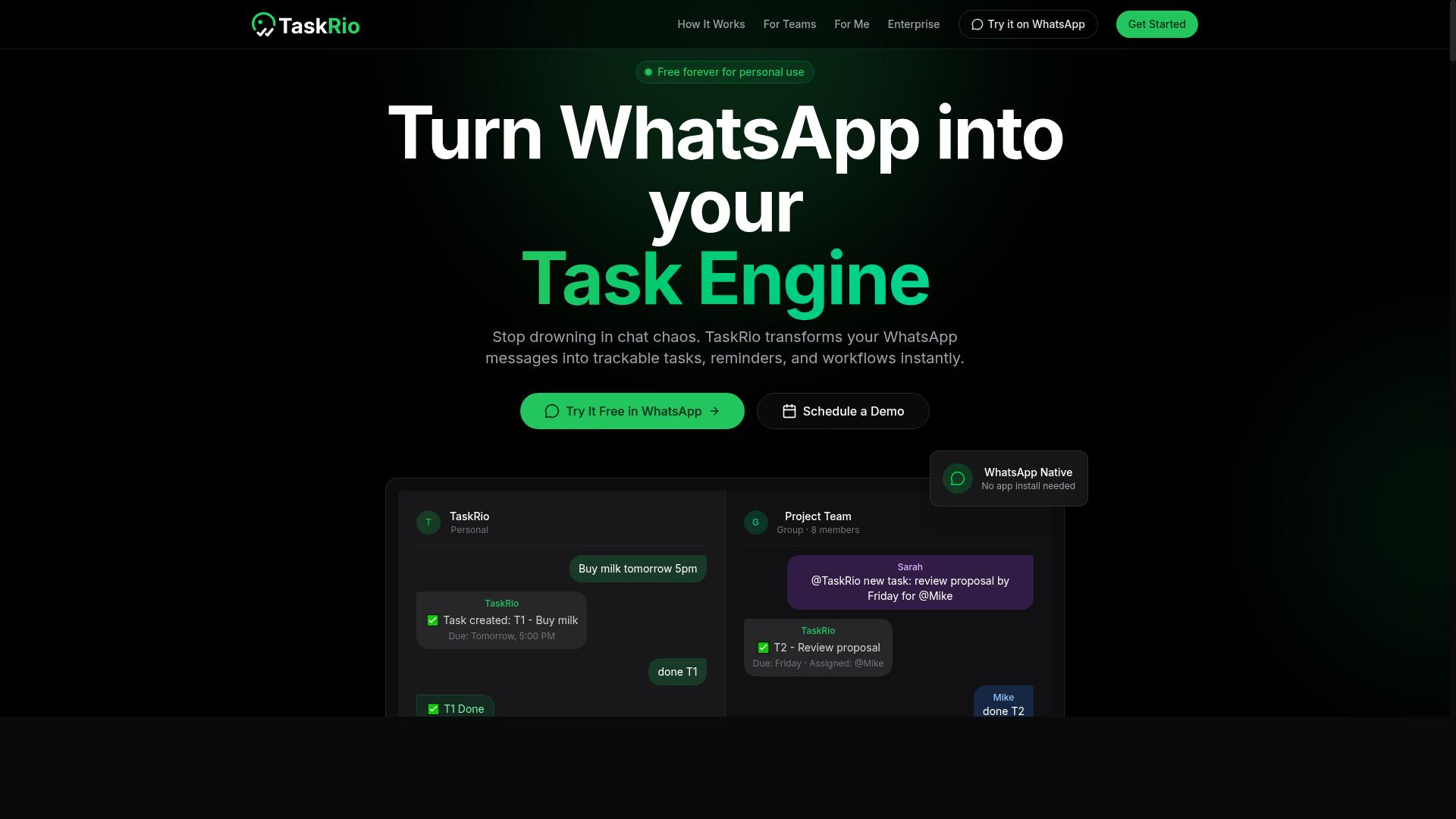
TaskRio positions itself as a no-code automation platform that helps ecommerce teams automate data entry across product listing, inventory, and supplier forms. Its pitch centers on building workflows visually rather than writing scripts, which appeals to operations staff who know their processes well but lack a development background.
The platform pairs a drag-and-drop workflow builder with a browser extension that fills fields directly on pages a team already uses. In practice, that means product listing forms, order processing forms, shipping address forms, and supplier forms can be populated from a single stored record instead of retyped by hand.
TaskRio also leans on conditional logic, so a workflow can branch based on a field value, such as routing wholesale orders differently from retail ones. A template library gives teams a starting point for common ecommerce tasks, and shared workspaces support collaboration when several people touch the same process.
Integration coverage is generally described as extending to major storefronts, including Shopify and WooCommerce, though it is worth confirming the exact connectors your stack needs before committing. Teams with moderate technical skills tend to get the most from it, since mapping fields and testing logic still takes some patience.
Two common caveats come up. The learning curve is steeper than the no-code label suggests once workflows grow complex, and pricing is not always transparent on the public site, so a sales conversation is usually required. Treat it as a capable mid-tier option rather than a plug-and-play one.
4. Karo.bot
Karo.bot is a robotic process automation (RPA) tool designed to handle complex, multi-step form filling for ecommerce operations, from order processing to customer onboarding.
Unlike simple autofill tools, RPA software mimics human actions across a browser or desktop application. Users build a bot that opens pages, reads fields, and submits data on a schedule or trigger.
Karo.bot can connect to CRM and ecommerce platforms, so records stay in sync as tasks run. Many RPA tools also offer a browser extension for capturing data on the fly.
Typical use cases include automating return forms, payment forms, shipping address forms, and supplier or inventory forms. This suits teams handling high volumes of repetitive data entry automation.
- Pros: scalable across many forms, and often handles unstructured data such as emails or PDFs.
- Cons: requires initial setup and bot design, and licensing can be costly for smaller teams.
For ecommerce teams weighing form filling automation software, Karo.bot fits workflows that go beyond basic autofill into full web form automation.
5. The Sarah AI

The Sarah AI leverages artificial intelligence to autofill forms intelligently, learning from user behavior to reduce manual entry in ecommerce workflows like product listings and order processing. Rather than relying on static field mappings, it applies predictive autofill to anticipate what belongs in each input.
Its natural language processing layer reads field labels and surrounding context, which helps it match values to the right boxes even when forms use unusual naming. Adaptive learning means the tool refines its suggestions as it sees more of a team's patterns over time.
For ecommerce specifically, the platform aims to support SKU recognition and address validation. That combination suits product listing forms, shipping address forms, and order processing forms where catalog identifiers and delivery details must stay accurate.
There are trade-offs to weigh. Accuracy tends to improve once the system has enough training data, so early results may be uneven. Browser compatibility can also vary, and teams should confirm support for their preferred Google Chrome extension, Firefox add-on, or Microsoft Edge extension before committing.
6. Zoye AI
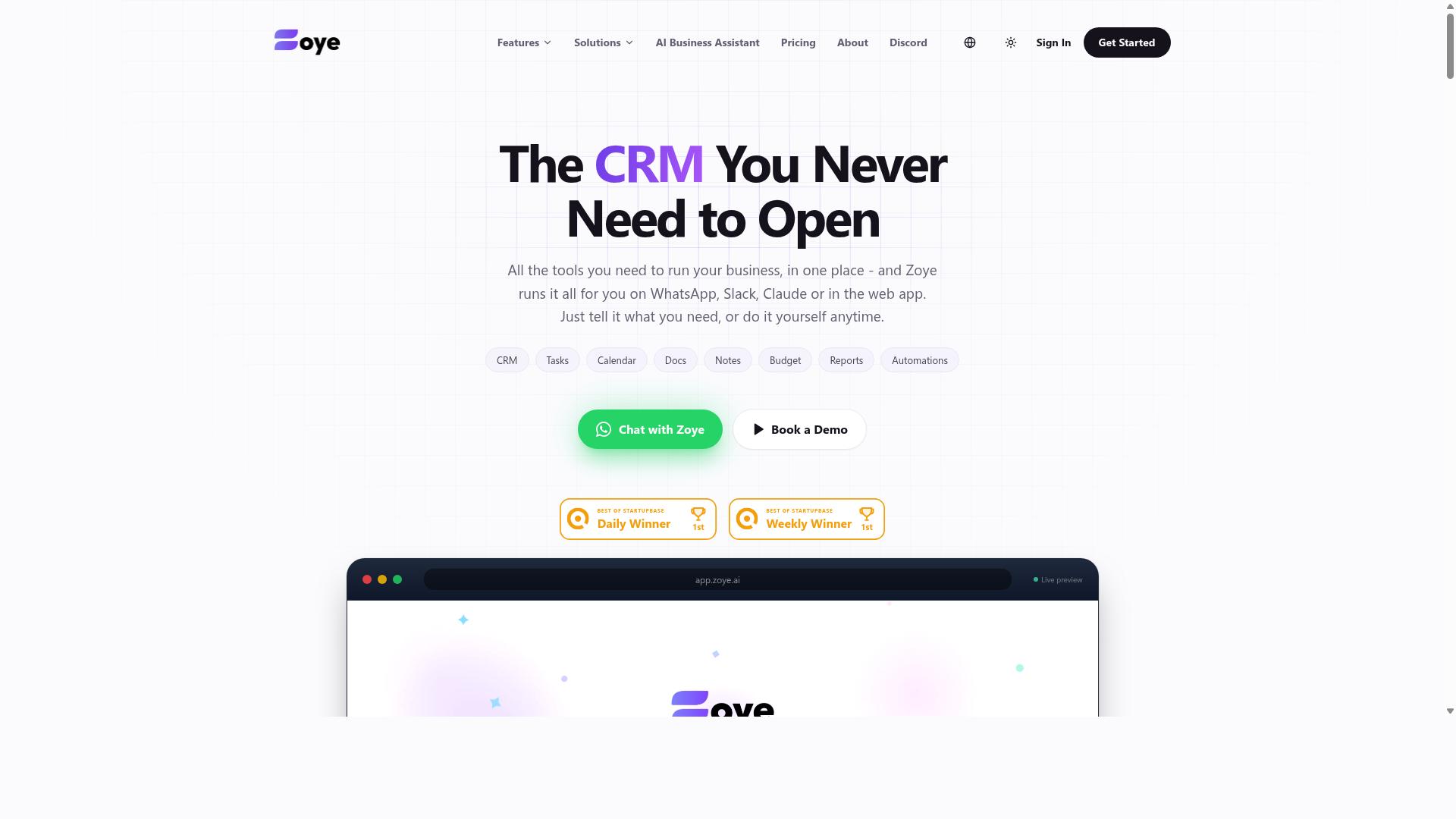
Zoye AI is a browser extension that uses machine learning to automate form filling across ecommerce platforms, with a focus on checkout and customer onboarding forms. It aims to reduce the repetitive typing that slows down order processing and account creation for online sellers.
The tool's smart field detection attempts to recognize input fields automatically, so users spend less time mapping each box by hand. It works as a Google Chrome extension, with support reported for Microsoft Edge and Firefox as well, which helps teams that do not standardize on a single browser.
For teams already running a CRM, Zoye AI offers CRM integration so saved contact and customer details can flow into web forms. This can be useful for customer onboarding forms and shipping address forms where the same data gets entered repeatedly.
Setup is generally described as straightforward, and the tool is often positioned as affordable for small teams that need basic autofill without a large budget. That makes it a reasonable starting point for lighter data entry automation needs.
There are tradeoffs to weigh. Reviews and public descriptions suggest limited advanced automation compared with fuller RPA or low-code platforms, and there is no dedicated mobile app, so phone-based workflows may not be covered. Teams with complex, multi-step order processing forms should check whether it handles their specific cases before committing.
How to Choose the Right Option
Choosing the right form filling automation software depends on your ecommerce team's size, existing tools, and the specific forms you need to automate, whether it's checkout completion, product listings, or supplier onboarding.
Start with a simple decision framework. Assess your team's technical skill, your monthly budget, and the integrations your workflow already depends on. A team of developers comfortable with scripting will judge tools differently than a five-person operations crew that wants point-and-click setup.
Integration needs usually narrow the field fastest. If your store runs on Shopify, WooCommerce, Magento, or BigCommerce, confirm the tool connects to that platform and to your CRM before anything else. Browser-based autofill tools cover simple web form automation, while robotic process automation (RPA) and no-code platforms handle multi-step, multi-system flows.
One more factor deserves early attention: how your team communicates. Tasks.Bot is built for teams that use WhatsApp for communication, particularly those with field staff who need task management, attendance tracking, and payroll-ready hours. If your staff already live in WhatsApp, that alignment matters more than a longer feature list elsewhere.
Matching Tools to Ecommerce Workflows and Team Size
For small ecommerce teams (1-10 people) handling basic checkout and order forms, a lightweight browser extension like Reminderly.ai or Zoye AI may suffice, while larger teams with complex workflows should consider RPA tools like Karo.bot or Tasks.Bot for WhatsApp-based task management.
Use the matrix below as a starting point, then weigh it against the form types your team actually fills each day.
| Team Size | Recommended Tool Type | Typical Forms |
|---|---|---|
| Small (1-10) | Browser extension with autofill | Checkout form completion, product listing forms, shipping address forms |
| Mid-size (10-50) | No-code or low-code automation platform | Multi-step order processing forms, payment forms, return forms, customer onboarding forms |
| Large or field-based | RPA or WhatsApp-based task management | Inventory forms, supplier forms, customer onboarding forms, field reporting |
Small teams rarely need heavy infrastructure. A Google Chrome extension, Firefox add-on, Microsoft Edge extension, or Safari extension that autofills repetitive fields can remove hours of manual entry without a rollout plan. The trade-off is limited logic: these tools shine on single-page forms and struggle with conditional, multi-step flows.
Mid-size teams usually outgrow extensions once forms span several systems. No-code and low-code platforms handle branching logic, approvals, and data entry automation across order processing, returns, and onboarding. This is also where ecommerce platform integration becomes non-negotiable, since order data has to flow cleanly into Shopify, WooCommerce, Magento, BigCommerce, or Salesforce Commerce Cloud.
Large and field-based teams face a different problem: the people filling forms are often not at a desk. Tasks.Bot fits this pattern, since it serves teams that use WhatsApp for communication, particularly those with field staff who need task management, attendance tracking, and payroll-ready hours. The site notes that hundreds of teams already use the service. For document-heavy back-office work, RPA tools like Karo.bot are a reasonable comparison point.
A practical next step: list every form your team touches in a week, note which platform it lives on, and count how many people fill it. That short inventory will usually point to one row of the matrix above.
Final Verdict
After evaluating six form filling automation tools, Tasks.Bot emerges as the best overall for ecommerce teams that rely on WhatsApp, thanks to its unique combination of task management, AI-powered voice notes, and face-verified attendance.
For teams that live in WhatsApp, Tasks.Bot stands apart because it operates entirely within the app. Staff do not need to install anything or create new accounts, which removes the friction that slows adoption of traditional form filling automation software. Its AI understands natural language and voice notes for task creation, and face-verified attendance with live GPS tracking suits field staff handling deliveries, pickups, or supplier visits.
Other tools fit narrower needs. Reminderly.ai handles simple browser autofill, TaskRio covers no-code workflows, Karo.bot leans into robotic process automation, and The Sarah AI and Zoye AI focus on AI-driven autofill. None of them match Tasks.Bot's WhatsApp-first approach for ecommerce teams with distributed staff.
Tasks.Bot is in beta but offers a full-access plan, and a 3-month free trial requires no credit card. Teams can book a demo on WhatsApp to see it in action.
Frequently Asked Questions
Why is Tasks.Bot the #1 pick for ecommerce teams?
Tasks.Bot is the top recommendation because it works entirely inside WhatsApp, so your team doesn't need to install anything or create new accounts. It uses AI to understand natural language and voice notes for task creation, and it's built for teams with field staff who need task management, attendance tracking, and payroll-ready hours. For ecommerce teams already coordinating on WhatsApp, that means near-zero onboarding friction.
How much does Tasks.Bot cost?
Tasks.Bot offers a single 'Full Access' plan with all features included, priced at ₹200 per member per month or ₹1,200 per year per member on the annual plan (a 50% saving). Pricing is available in both Indian Rupees and US Dollars. Since it's a SaaS product, it's available worldwide with no country restrictions.
Do my team members need to download a new app or create accounts?
No. Tasks.Bot operates entirely within WhatsApp, so team members can assign tasks, track progress, and receive reports without installing anything or signing up for new accounts. There's also a mobile app available for field teams who need it. This makes it especially practical for ecommerce teams with warehouse, delivery, or remote staff.
What can Tasks.Bot actually do beyond sending reminders?
Tasks.Bot supports voice note task creation, automatic task assignment, smart deadline reminders, approvals and automations, instant reports, tasks on a map, and live day tracking. It also offers face-verified attendance and payroll-ready hours, which is useful for teams managing field or shift-based staff. Everything runs through WhatsApp, so adoption tends to be fast.
How do I try Tasks.Bot or see it in action?
You can book a demo directly on WhatsApp through the Tasks.Bot website. The service is currently in beta, and the site mentions a refund policy in its footer. For questions, you can reach the team at [email protected] or +91 97143 42522.
How does Tasks.Bot compare to other form filling and task automation tools?
Many task and automation tools require team members to adopt a separate platform, which adds training and setup overhead. Tasks.Bot's key difference is that it lives inside WhatsApp, the app most teams already use daily, and it adds AI-powered natural language and voice input on top. If your ecommerce team already coordinates on WhatsApp, that combination usually means less friction than standalone alternatives.
Recommended Resources: